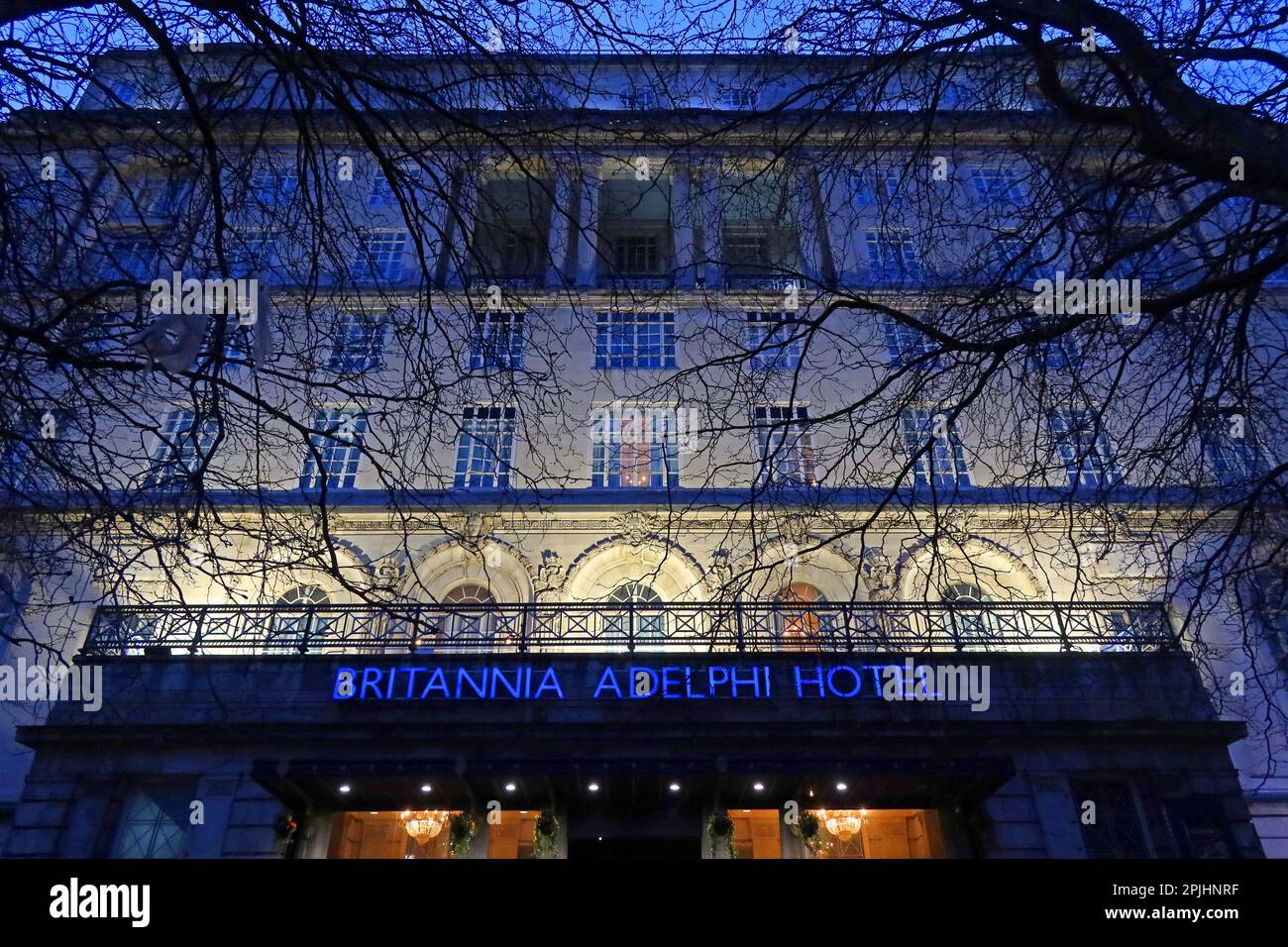
The ‘third’ Adelphi opened in 1914 and is the same building that stands to this day. The new building was designed by Frank Atkinson, and construction was left in the hands of one of the most renowned firms in Liverpool. Once again, the building outshone the one that came before; this time the magnificent structure housed a heated indoor swimming pool, tennis and squash courts, Turkish baths, shooting galleries and two restaurants that specialised in both French and English cuisine. It was also thought that this was the first hotel in the country to have these facilities. Yet what really made the new hotel stand out from the rest was the fact that each room was fitted with an amazing and state-of-the-art contraption: a telephone. During the early years of the 20th century, the Adelphi became one of the main arrival and departure points for those travelling on ocean liners, including the Titanic. The Adelphi served as the most popular hotel in Liverpool for wealthy passengers before they embarked on their journey to North America. Liverpool became a common stop-over point and the Adelphi largely benefited from this, making it a leading hotel in the city centre. Wealthy guests continued to pass through the doors and celebrity guests also were seen to become increasingly popular. Inside the Adelphi, the grand lounge (the Sefton suite) was rumoured to have been replicated in the infamous RMS Titanic’s first class smoking lounge, however this has now been found to be false. Throughout the 20th century, the new Adelphi became a popular location for several politicians along with many other noteworthy celebrities. In the late 1940s, Prime Minister Winston Churchill was amongst some of the high-status visitors to stay at the hotel. Due to his fondness of the hotel he then went on to host strategy meetings at the Adelphi. Another Prime Minister to pass through the doors was Harold Wilson – whose preferred suite was later named after him