5172 x 3648 px | 43,8 x 30,9 cm | 17,2 x 12,2 inches | 300dpi
Data acquisizione:
3 settembre 2022
Ubicazione:
Crewe,Cheshire,England,UK
Altre informazioni:
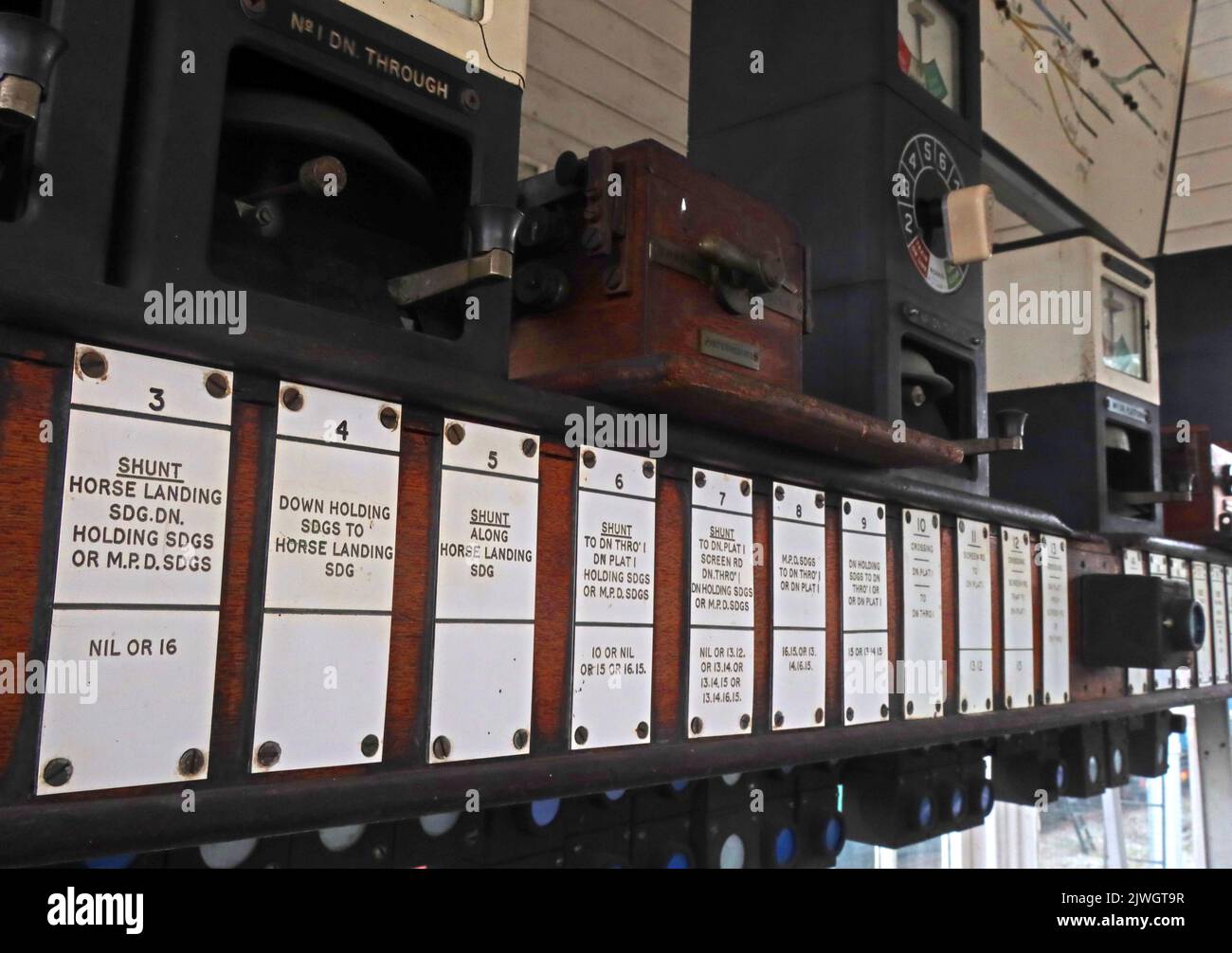
. A grounded documentary photograph made at Crewe, Cheshire, England, UK in 2022, combining the immediate subject with evidence of the surrounding streetscape, public realm, business activity or local character. The scene records Crewe, Station A signalbox - lever labels - Cheshire, England, UK. Another layer of the photograph includes changing land use, regional identity, before-and-after reference, built heritage, architectural character, historical comparison, period architecture, working railway heritage, railway heritage, public-realm investment, social history, visual archive, town-centre renewal, and station environment. Current relevance extends to signalling technology and station investment, particularly through the importance of preserving signal boxes and rolling stock as industrial heritage. In present-day coverage, the subject reaches into heritage conservation and planning, not least because of the tension between preserving local character and creating modern commercial space. The archival value lies partly in recording transport arrangements and footfall around Crewe, Cheshire, England, UK before closure or conversion alters the character of the place. Other useful contextual ideas include heritage-led regeneration, rail infrastructure, urban fabric, community identity, historic rolling stock, documentary photography, mechanical signalling, and signal-box architecture. References to signalbox, labels, Crewe, lever, and Station give the picture a strong period identity and tie it closely to its named subject. The period setting at Crewe, Cheshire, England, UK helps place the main subject within real social and physical surroundings rather than isolating it as an abstract object. Another strand within the photograph is signalling technology and the role of rail in lower-carbon regional transport within the real-world context of Crewe, Cheshire, England, UK. The frame retains part of the area's social history before later change alters the scene.