7360 x 4907 px | 62,3 x 41,5 cm | 24,5 x 16,4 inches | 300dpi
Data acquisizione:
6 giugno 2013
Ubicazione:
Mesa, AZ
Altre informazioni:
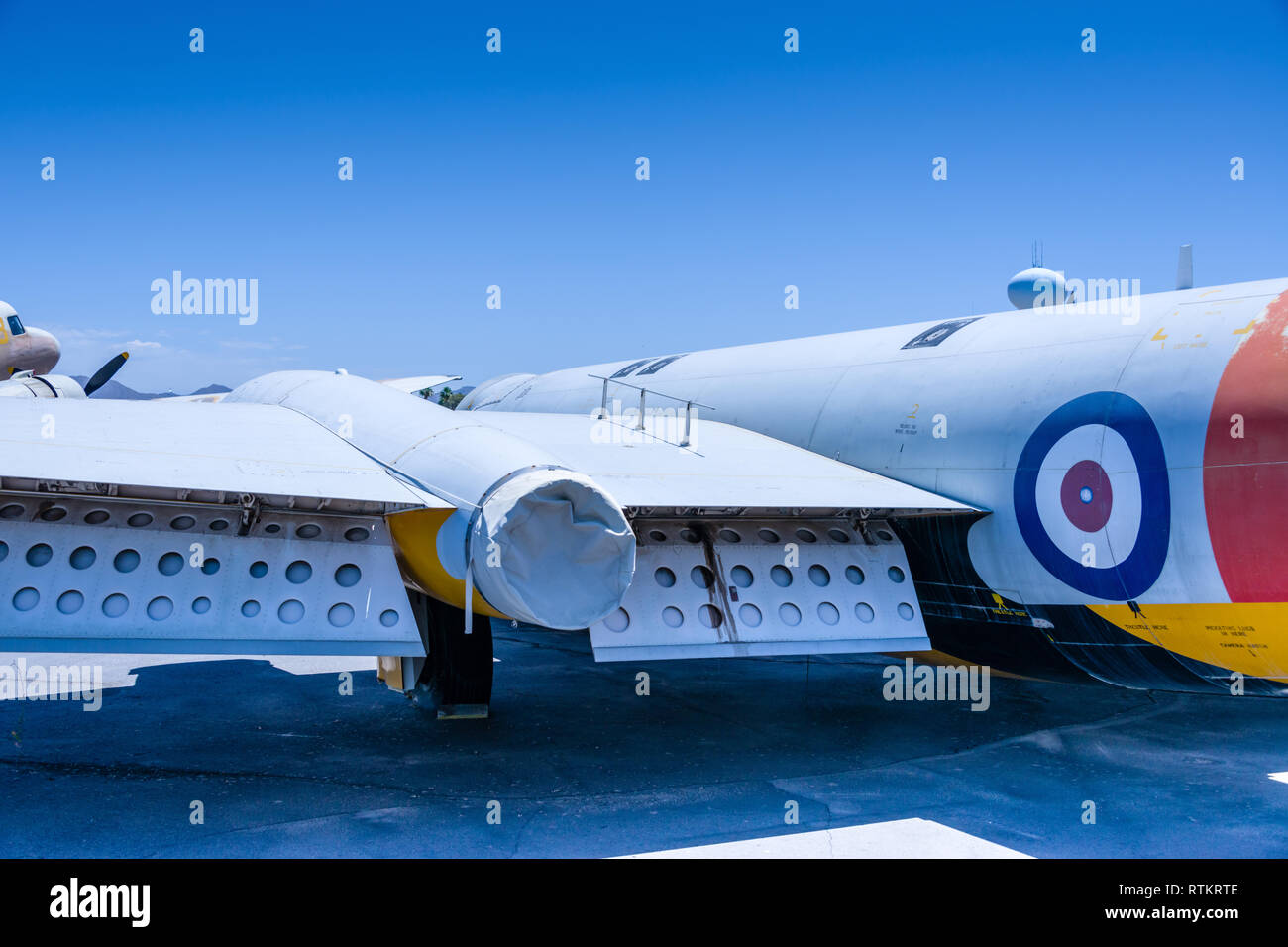
Next is an English Electric Canberra TT.18 first-generation jet-powered light bomber. The Canberra could fly at a higher altitude than any other bomber through the 1950s and set a world altitude record of 70, 310 ft (21, 430 m) in 1957. Due to its ability to evade the early jet interceptors, and its significant performance advancement over contemporary piston-engined bombers, the Canberra was a popular export product and served with many nations. I find it interesting that the first British jet bomber had the engines embedded in the wings much like the de Havilland DH 106 Comet, which was the first production commercial jetliner. A bit of research showed that the earliest American jet bombers had a similar configuration. I tend to think of the pre-stealth jet bombers as having the engines mounted below the wings — which I assume would be easier to service or replace than the in-wing design. But I was a software engineer so what do I know of aircraft design (other than building a model B-52 Stratofortress when I was a kid)? Back to the Canberra, Wikipedia says, "In addition to being a tactical nuclear strike aircraft, the Canberra proved to be highly adaptable, serving in varied roles such as tactical bombing and photographic and electronic reconnaissance. Canberras served in the Vietnam War, the Falklands War, the Indo-Pakistani Wars, and numerous African conflicts. In several wars, both of the opposing forces had Canberras in their air forces. The Canberra was retired by its first operator, the Royal Air Force (RAF), in June 2006, 57 years after its first flight. Two of the Martin B-57 variant remain in service, performing meteorological work for NASA, as well as providing electronic communication (Battlefield Airborne Communications Node or BACN) testing for deployment to Afghanistan."