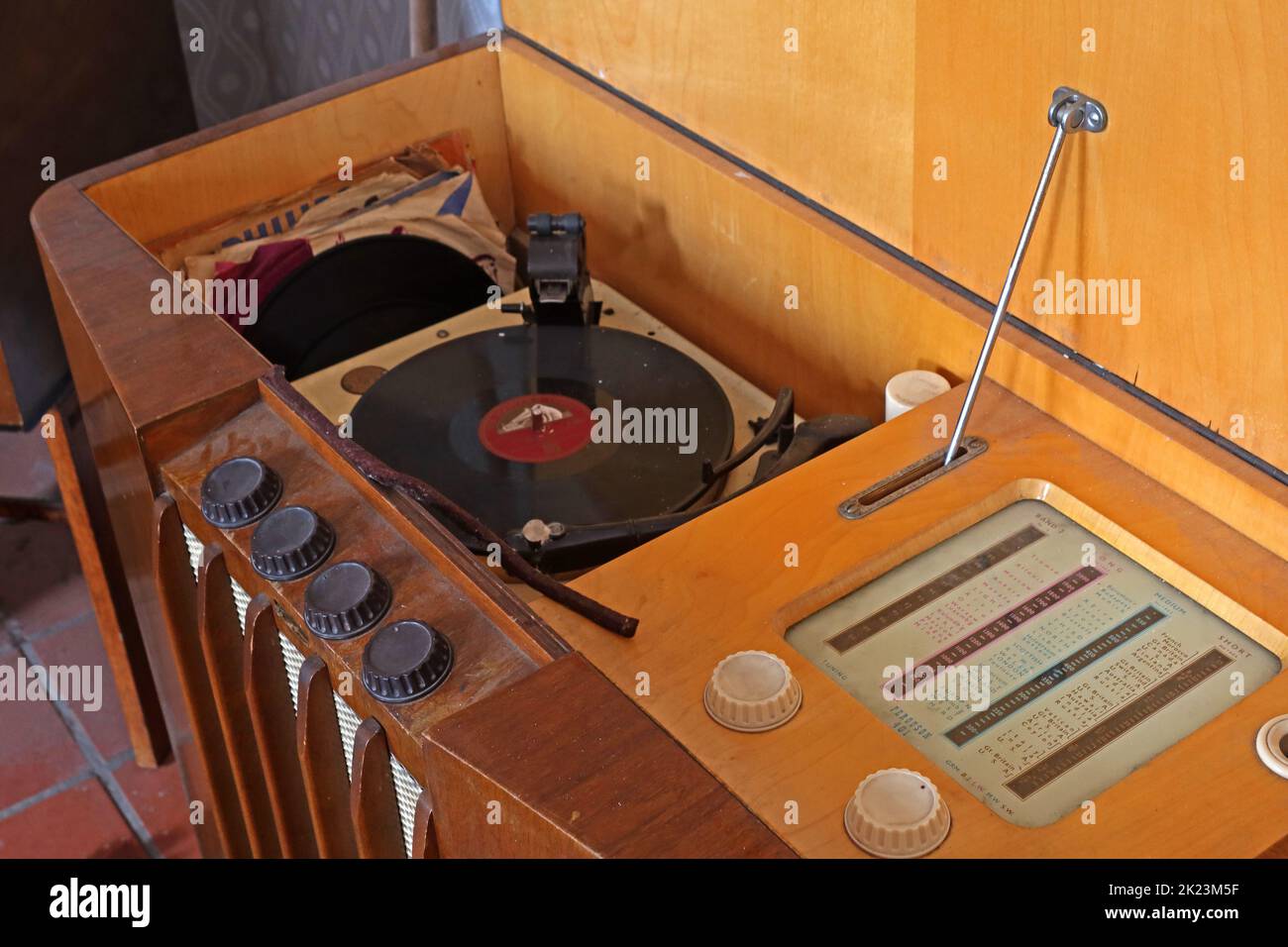
Ferguson 401 radiogrammi con giradischi e LP in vinile da 12 pollici, che mostra la tecnologia delle valvole della metà del secolo in un soggiorno inglese
5472 x 3648 px | 46,3 x 30,9 cm | 18,2 x 12,2 inches | 300dpi
Data acquisizione:
14 settembre 2022
Ubicazione:
Vintage Ferguson radio gramophone cabinet captures 1950s home audio, record players, valves and dome
Altre informazioni:
Ferguson 401 radiogram with open wooden cabinet, turntable and 12-inch vinyl LP record, photographed as a piece of mid-century domestic audio technology in an English living room. The image shows the record deck, tonearm, radio tuning scale, cream control knobs, speaker grille and storage space for records, all built into a polished wooden console cabinet. It is useful for editorial coverage of vintage hi-fi, valve technology, record players, vinyl culture, radio gramophones, post-war home entertainment, British electrical manufacturing, retro interiors and the changing way families listened to music and broadcast radio at home. The Ferguson 401 is more accurately described by several specialist and auction references as a mid-1950s radio gramophone rather than a 1960 model, although similar radiogram furniture remained part of British living-room culture into the early 1960s. Radiomuseum records the Ferguson 401RG as a console radiogram originally fitted with a Garrard RC 80M record changer, a 12-inch bass speaker, 6 x 4-inch treble speaker and EL84 output valves. Auction listings have described a Ferguson model 401 radio gramophone as circa 1955, with a walnut case and cream and brown Bakelite fittings. Radiograms were once aspirational household objects, combining radio receiver, amplifier, loudspeaker and gramophone in one substantial item of furniture. Before compact stereos, cassette decks, CDs, streaming and Bluetooth speakers, a cabinet like this could be the centre of the room, used for BBC radio, light music, dance bands, classical records and later LP albums. It also evokes the move from shellac 78s towards microgroove vinyl, when long-playing records changed listening habits. The warm timber, analogue dial and visible vinyl disc make the photograph useful for stories about nostalgia, interiors, audio collecting, repair culture, analogue sound, 1950s design, British consumer electronics and surviving domestic technology.