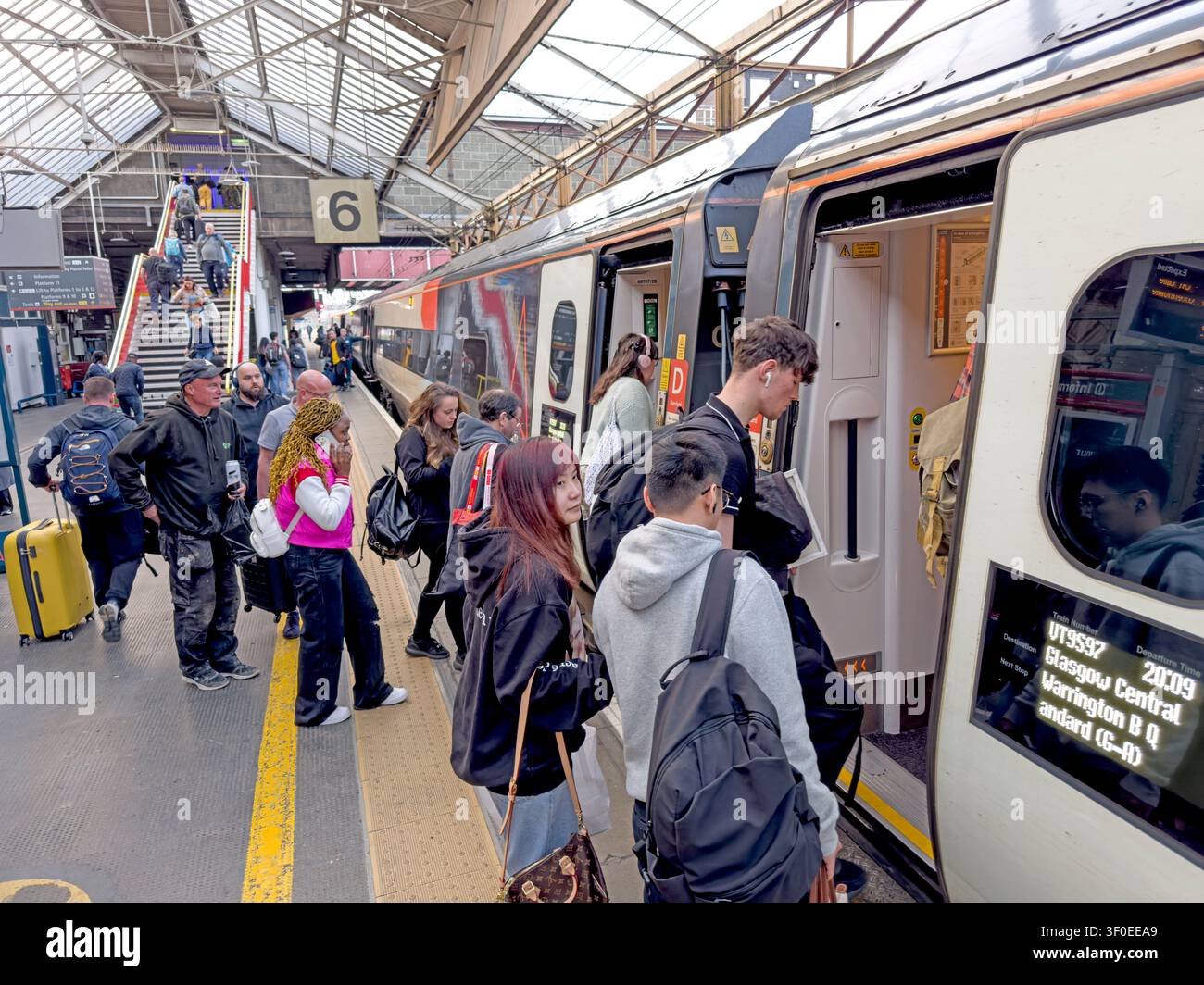
Passengers queue to board a busy northbound Avanti West Coast intercity train at Crewe railway station in Cheshire, England. The train is standing beside platform 6 beneath the station’s extensive glazed and steel canopy, with several carriage doors open as travellers join the service. An electronic display beside the nearest entrance identifies coach D and shows Glasgow Central as the destination, with Warrington Central visible among the calling information. Backpacks, shoulder bags and wheeled suitcases illustrate the mixture of longer-distance, leisure and everyday passenger journeys using this important West Coast Main Line interchange. A group of younger passengers waits immediately beside the nearest doorway while other travellers move along the platform or approach the train from the footbridge stairs. A bright yellow suitcase stands out among darker luggage and clothing, adding colour to the crowded scene. The yellow platform-edge line and tactile paving remain visible beneath the passengers, while the open doors, carriage information, platform number and steady flow of people create a detailed documentary view of railway boarding and station operations. Crewe developed into one of Britain’s most significant railway junctions after the arrival of the railways during the nineteenth century. Routes converge here from London, Birmingham, Manchester, Liverpool, North Wales and Scotland, making the station an important interchange for journeys across the Midlands, North West England and the wider national network. Its long platforms, overhead footbridges and large train shed continue to reflect the scale of traffic handled at this historic railway town. The West Coast Main Line is one of Britain’s principal intercity rail corridors, connecting London Euston with major urban centres including Birmingham, Manchester, Liverpool, Glasgow and Edinburgh. Avanti West Coast operates long-distance passenger services along much of the route, and Crewe is a key stopping