6144 x 4088 px | 52 x 34,6 cm | 20,5 x 13,6 inches | 300dpi
Data acquisizione:
1 novembre 2008
Altre informazioni:
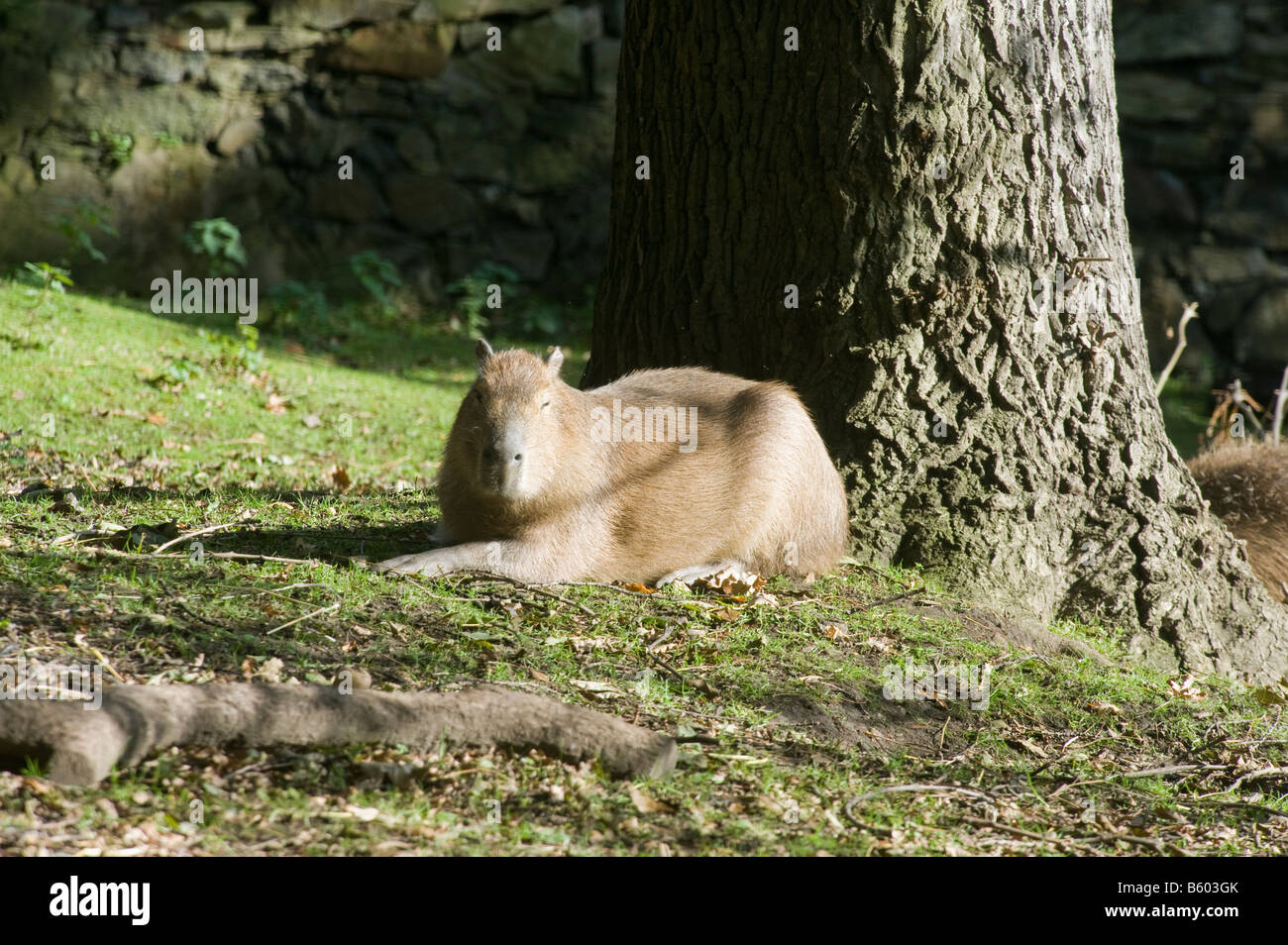
Capybara are semi-aquatic mammals found wild in much of South America, including Panama, Colombia, Ecuador, Bolivia, Venezuela, Brazil, Argentina, French Guyana, Uruguay, Peru, and Paraguay in densely forested areas near bodies of water, such as lakes, rivers, swamps, ponds and marshes, such as flooded savannah and along rivers in tropical forest. They roam in home ranges of 25–50 acres (10–20 ha). Many escapees from captivity can also be found in similar watery habitats around the world, including (July 2008) the River Arno in Florence, Italy.During the Christian celebration of Lent, capybara meat is especially popular as it is claimed that the Catholic church, in a special dispensation, classified the animal as a fish in the 16th century. (cf. Barnacle goose) There are differing accounts of how the dispensation arose. The most cited refers to a group of 16th Century missionaries who made a request which implied that the semi-aquatic capybara might be a "fish" and also hinted that there would be an issue with starvation if the animal wasn't classified as suitable for Lent.The meat is said to look and taste like pork. The Capybara meat is dried and salted, then shredded and seasoned. Considered a delicacy, it is often served with rice and plantains.