3814 x 2550 px | 32,3 x 21,6 cm | 12,7 x 8,5 inches | 300dpi
Data acquisizione:
2011
Altre informazioni:
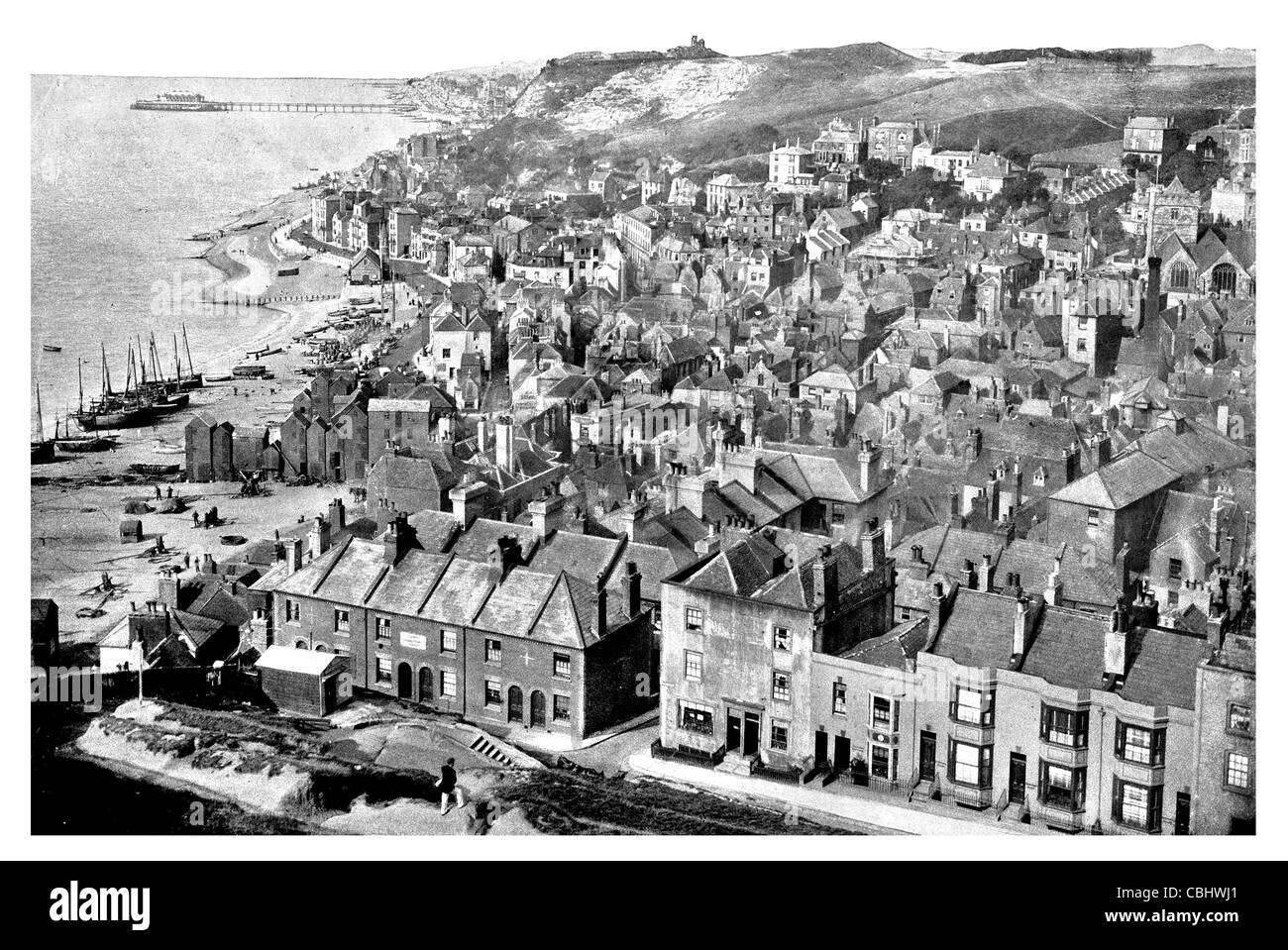
Hastings is a town and borough in the county of East Sussex on the south coast of England. The town is located 24 mi (39 km) east of the county town of Lewes and 53 mi (85 km) south east of London, and has an estimated population of 86, 900. In historical terms, Hastings can claim fame through its connection with the Norman conquest of England; and also because it became one of the medieval Cinque Ports. Hastings was, for centuries, an important fishing port; although nowadays much reduced, it still has the largest beach-based fishing fleet in England. The town became a watering place in the 1760s, and then, with the coming of the railway, a seaside resort. The attraction of Hastings as a tourist destination continues; although the number of hotels has decreased, it caters for wider tastes, being home to internationally-based cultural and sporting events, such as chess and running. It has set out to become "a modern European town" and seeks to attract commercial business in the many industrial sites round the borough. By the end of the Saxon period, the port of Hastings had moved eastward near the present town centre in the Priory Stream valley, whose entrance was protected by the White Rock headland (since demolished). It was to be a short stay: Danish attacks and huge floods in 1011 and 1014 motivated the townspeople to relocate to the New Burgh. In the Middle Ages Hastings became one of the Cinque Ports; Sandwich, Dover, and New Romney being the first, Hastings, and Hythe followed, all finally being joined by Rye and Winchelsea, at one point 42 towns were directly or indirectly affiliated to the group. In the 13th century much of the town was washed away by the sea. During a naval campaign of 1339, and again in 1377, the town was raided and burnt by the French, and seems then to have gone into a decline. As a port, Hastings' days were finished.