5330 x 3605 px | 45,1 x 30,5 cm | 17,8 x 12 inches | 300dpi
Ubicazione:
RAF Kinloss, Moray, Grampian Region. Scotland. United Kingdom.
Altre informazioni:
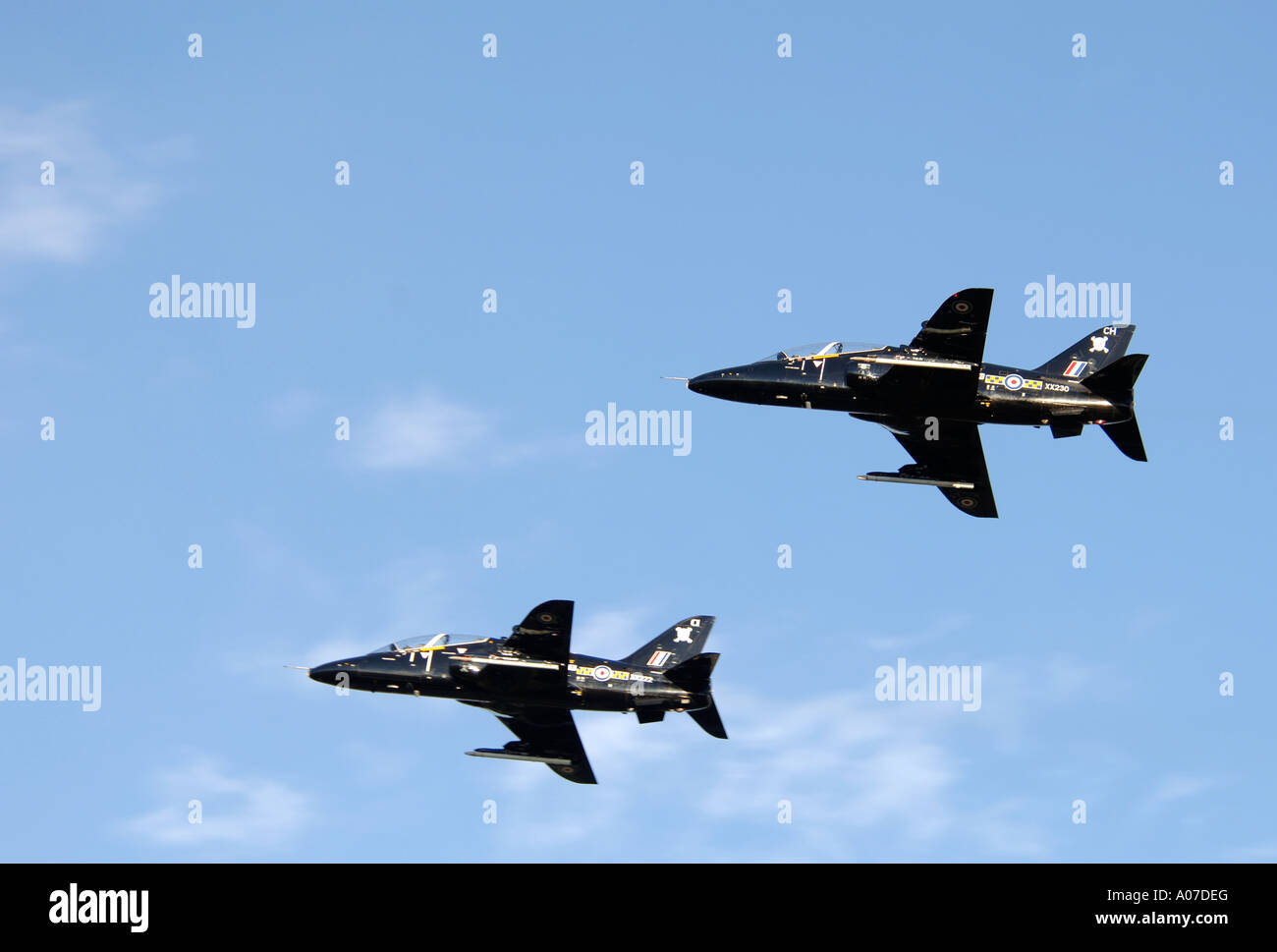
In the early 1960s, the British Royal Air Force (RAF) was operating two jet trainer aircraft: the Hawker Hunter T.7 two seat side-by-side trainer, and the Folland Gnat T.1. The Hunter trainer was well liked, but it was also expensive to operate; had limited endurance; and its side-by-side seating arrangement was increasingly seen as outdated. Side-by-side seating is well suited for primary training, since it gives the instructor a close view of what the student pilot is doing, but is poorly suited to advanced training, since it creates a cockpit environment that is dissimilar to that of the single-seat aircraft the student is presumably being trained to fly. Although the Gnat T.1 was appreciated for its agility and good handling, and achieved recognition as the mount for the RAF Red Arrows aerobatic display team, it suffered from high maintenance overhead; a cramped cockpit that could not accommodate tall pilots, and left the flight instructor straining to see forward through the back of the student's head; and no weapons training capability. In 1964, the RAF released a draft requirement for a trainer to replace both the Hunter trainers and the Gnat T.1, with the designation "Air Staff Target (AST) 362". Transition to the new trainer was to begin in the mid-1970s. In step with the spirit of the times, the new trainer was to have a top speed of Mach 1.5. It hadn't been realized yet that the benefits of a supersonic trainer did not really outweigh the drawbacks of higher purchase and operation costs. Then international politics intervened. The French were also interested in a new trainer to replace their Lockheed T-33 "T-birds" and Dassault Mystere IVs, and a round of typically complicated Anglo-French negotiations followed. These discussions led off in one direction to the Anglo-French SEPECAT Jaguar, which was originally conceived as a trainer and light strike aircraft. Ultimately, the Jaguar became very much a competent strike fighter, but was simply too much a