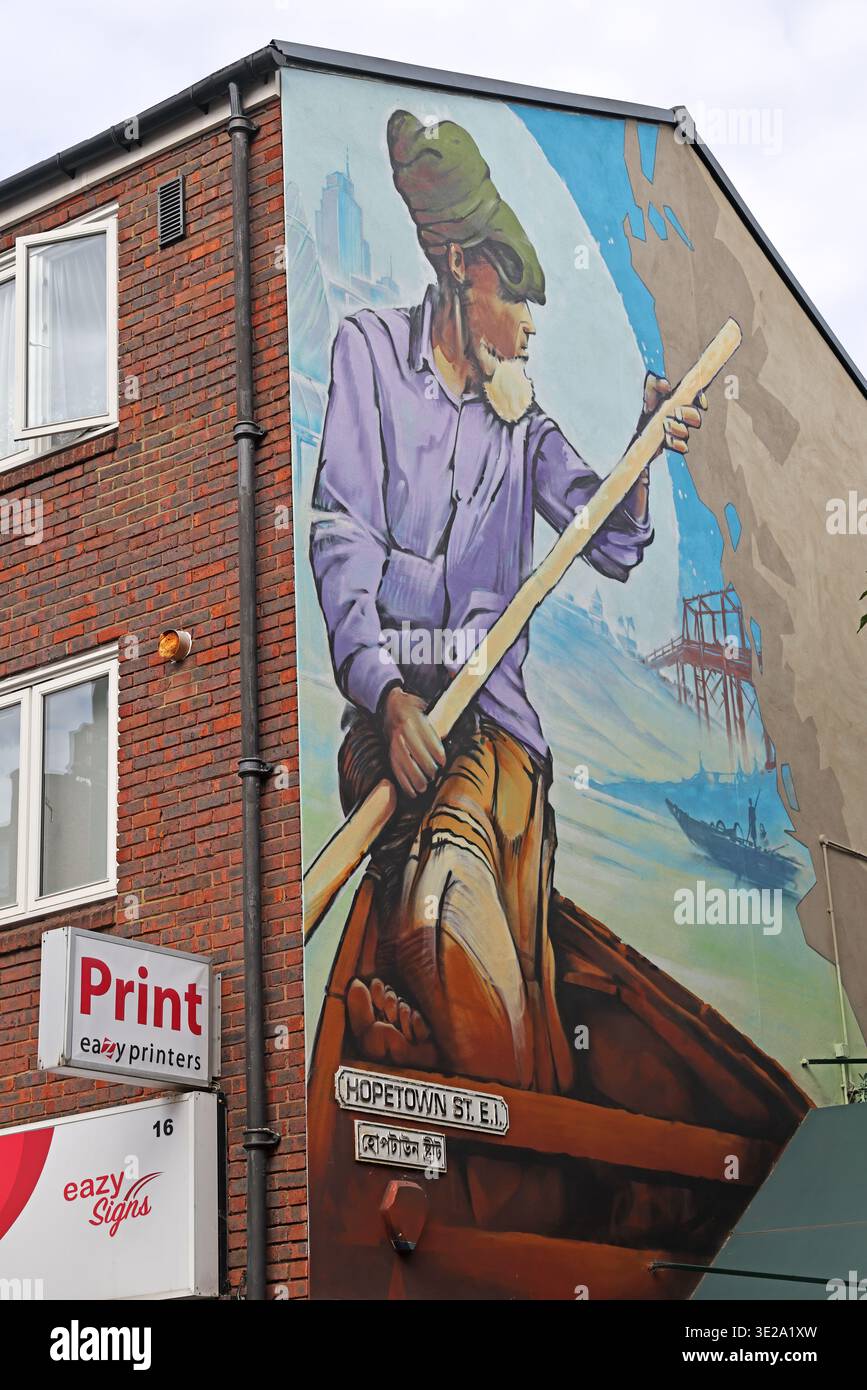
Il murale di Hopetown accanto a Brick Lane nella zona est di Londra, una grande opera d'arte pubblica di Mohammed Ali che celebra il patrimonio e l'identità del Bangladesh.
5464 x 8192 px | 46,3 x 69,4 cm | 18,2 x 27,3 inches | 300dpi
Data acquisizione:
24 agosto 2025
Ubicazione:
The Hopetown mural beside Brick Lane in East London, a large public artwork by Mohammed Ali celebrat
Altre informazioni:
Large-scale mural on the corner of Hopetown Street beside Brick Lane in East London, painted by British Bangladeshi street artist Mohammed Ali. The artwork shows a boatman in a rural landscape, using bold figurative imagery to evoke memory, migration, homeland, and the continuing emotional ties between London’s Bangladeshi community and Bangladesh itself. This is a strong editorial and documentary image of public art in Banglatown, useful for themes including street art, East End identity, immigrant heritage, cultural expression, urban regeneration, and contemporary mural painting in the UK capital. The image works especially well because it places a vivid, human figure onto a large urban wall in one of London’s most culturally layered districts. Brick Lane has long been associated with migration, political activism, food culture, street markets, creativity, and changing urban identity, and this mural fits squarely within that wider story. The painted boatman and watery landscape introduce a visual connection to rural Bangladesh, creating a deliberate contrast with the surrounding brick-built London streetscape. That gives the image extra value for searches around British Bangladeshi culture, public mural projects, identity and belonging, and community-led artistic expression in East London. As a stock image, it is relevant for editorial, publishing, travel, arts journalism, education, and social history use. It suits searches linked to Brick Lane mural, Hopetown Street mural, Mohammed Ali artwork, London street art, Banglatown public art, Tower Hamlets culture, and multicultural London. The vertical format, strong colour blocks, and clear figurative style make it visually distinctive and commercially useful for articles or features about London neighbourhoods, creative placemaking, heritage celebration, and the role of mural art in representing communities within the modern city.