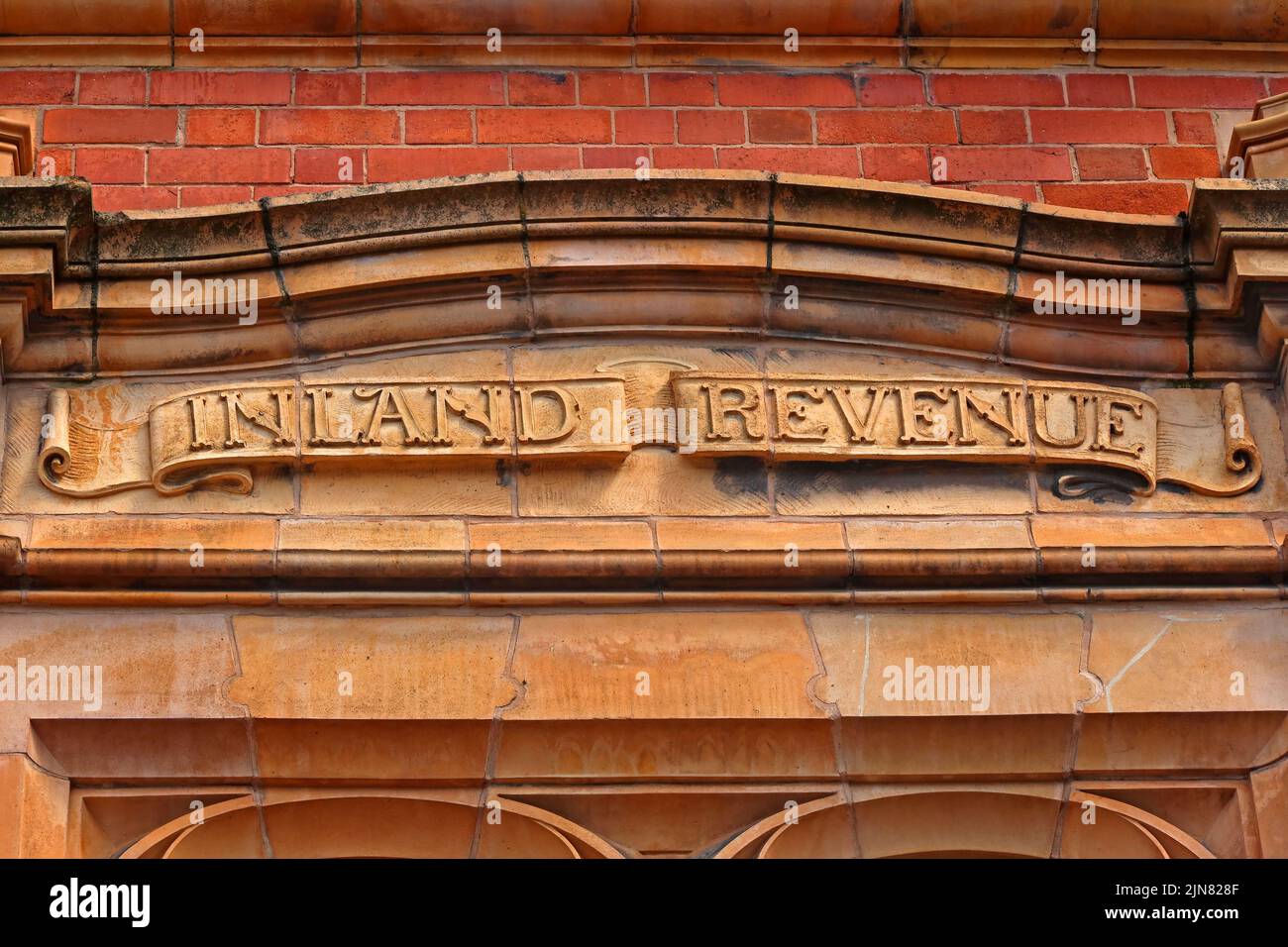
. Inland Revenue office, Warrington, former County Court and Inland Revenue building at the junction of Winmarleigh Street, Cheshire, England, WA1 1AG. Photographed on 6 August 2022. The recorded location is Winmarleigh Street, Warrington, Cheshire, England, WA1 1AG. The wider historical story is that historic and modern architecture can be read as a record of investment, planning and changing urban functions; Civic, commercial, industrial and residential structures each contribute to the character of a townscape, particularly where older structures are adapted rather than demolished. The historical context is that historic objects and places gain meaning through survival; Materials, craftsmanship, inscriptions and later alterations can reveal how a building, machine or everyday item was made, used and valued, while preservation decisions show which parts of the past communities choose to retain. In the longer view, commemorative plaques, gravestones and monuments transform individual or collective memory into a permanent feature of the landscape; Their wording, materials and location can illuminate genealogy, social history, military service and changing attitudes to public remembrance. In the present 2026 context, current regeneration policy places growing emphasis on reusing established structures and strengthening town centres. historic façades, redundant offices and converted commercial properties are especially relevant to debates about conservation, viability and adaptive reuse. The subject remains topical in 2026 because conservation is increasingly considered alongside regeneration, climate resilience and adaptive reuse; The value of a historic subject therefore lies not only in nostalgia but in the evidence it provides about materials, local identity and how places change. Other strongly related concepts include architectural heritage, building façade, historic building, built environment, streetscape, and architectural detail.