3000 x 4000 px | 25,4 x 33,9 cm | 10 x 13,3 inches | 300dpi
Data acquisizione:
24 agosto 2013
Ubicazione:
Edinburgh Old Town, Lothian, Scotland EH1
Altre informazioni:
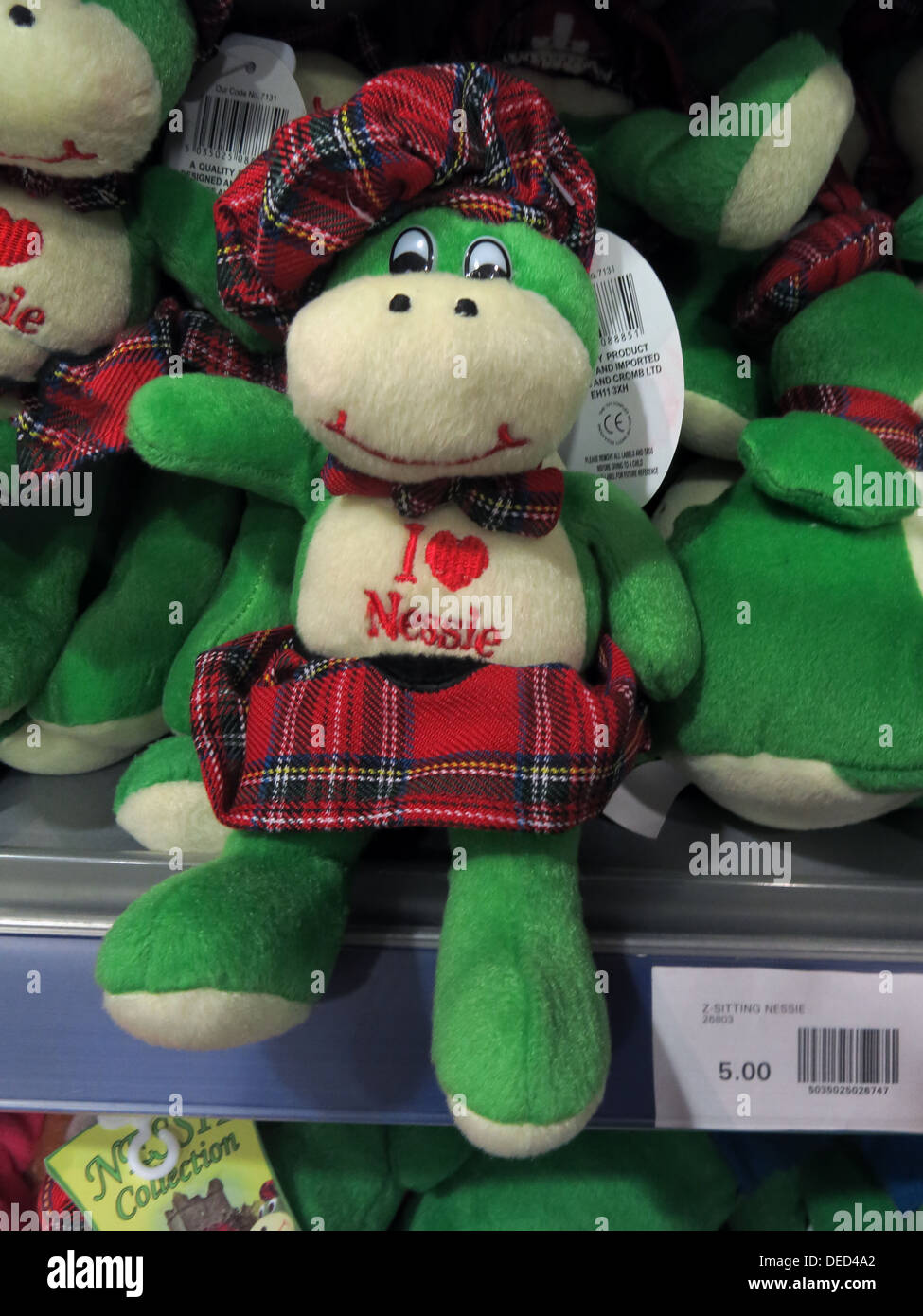
Green plush Loch Ness Monster souvenir displayed among similar toys in an Edinburgh gift shop, Scotland. The friendly character has a cream snout and stomach, large cartoon eyes, an embroidered smile and dangling legs. It wears a red Royal Stewart-style tartan bonnet and matching kilt, with a black imitation sporran. A heart motif and the word “Nessie” are embroidered on its chest, presenting the legendary creature as a humorous Scottish keepsake. The close view concentrates on one toy seated at the front of a crowded retail shelf. Other green Nessie figures overlap in the background, while product tags and a shelf-edge price of £5.00 reveal the commercial setting. Bright colours, soft fabric, checked clothing and an approachable expression turn a mysterious folklore figure into a child-friendly mascot and inexpensive visitor gift. Nessie is the popular name given to the legendary creature said to inhabit Loch Ness in the Scottish Highlands, southwest of Inverness. Descriptions commonly portray the monster as long-bodied, sometimes green, with humps and a snake-like head. Stories of a mysterious creature in the area reach back more than 1, 500 years, while modern international interest grew rapidly after reported sightings during the 1930s. No conclusive scientific evidence has established that such a monster exists, but the legend remains one of Scotland’s most recognisable pieces of folklore. Nessie imagery appears on toys, clothing, postcards and other tourist merchandise sold throughout Scotland, including Edinburgh. This product combines the monster legend with familiar visual shorthand for Scottish identity: tartan fabric, a traditional bonnet, kilt and sporran. The playful souvenir is aimed at families, international visitors, collectors and shoppers seeking a recognisable reminder of a Scottish holiday. The photograph also records destination branding, mass-market giftware and the commercial use of national mythology in tourism retail.