6100 x 4067 px | 51,6 x 34,4 cm | 20,3 x 13,6 inches | 300dpi
Data acquisizione:
30 aprile 2023
Ubicazione:
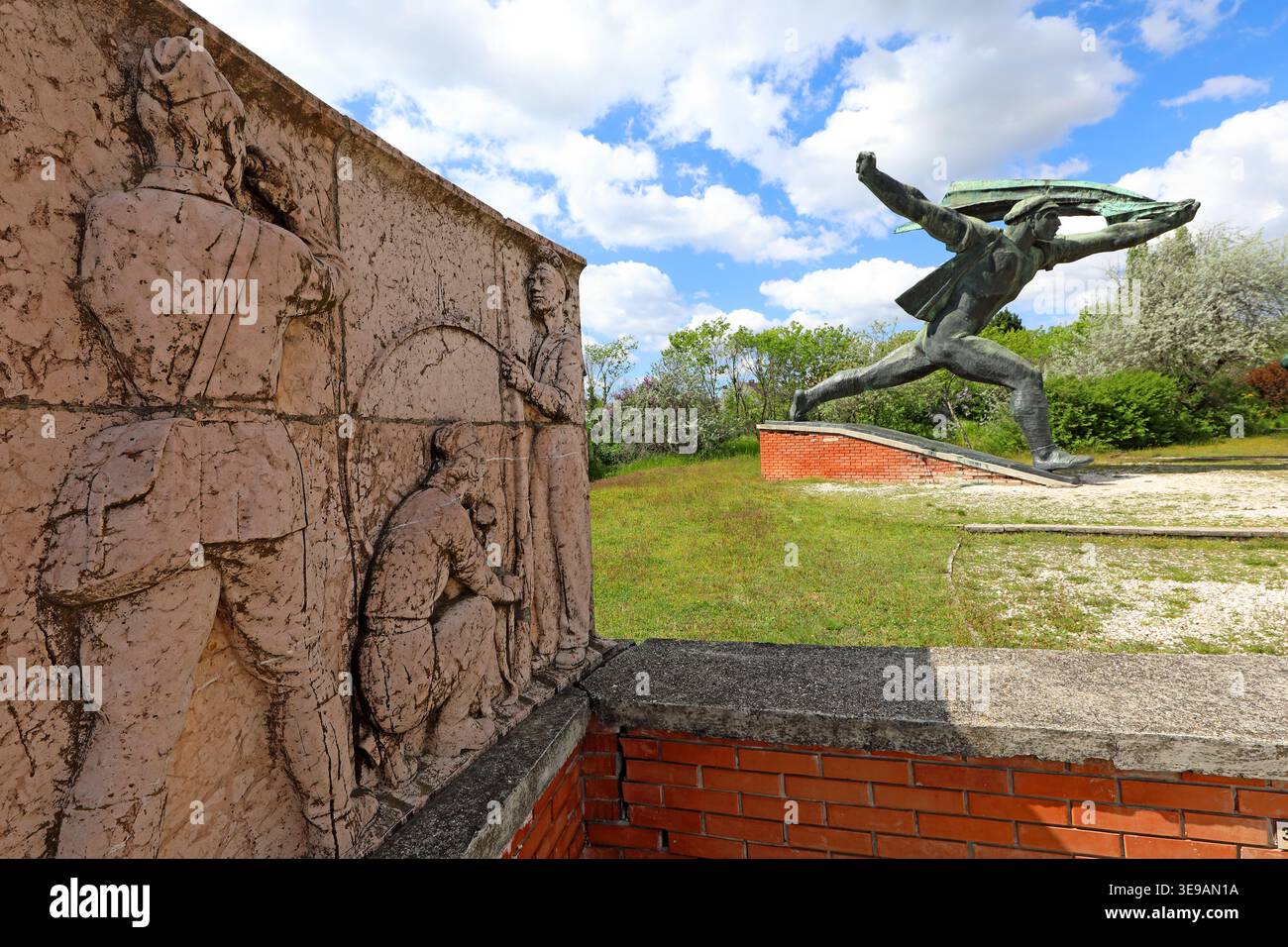
Republic of Councils Monument and Spanish International Brigades memorial at Memento Park, Budapest.
Altre informazioni:
Memento Park in Budapest, Hungary, showing Soviet era and communist period public monuments removed from the city after the fall of the Hungarian People’s Republic. The bronze figure on the right is the Republic of Councils Monument, or Tanácsköztársasági emlékmű, by István Kiss, completed in 1969 and based on a dynamic revolutionary sailor image associated with the short-lived Hungarian Soviet Republic of 1919. The foreground relief appears to be the Hungarian Fighters in the Spanish International Brigades Memorial by Makrisz Agamemnon, also known as Memos Makris, made in 1968 to commemorate Hungarian volunteers who fought in the Spanish Civil War. The photograph is valuable for editorial use around Cold War history, communist propaganda, socialist realism, dictatorship memory, post-communist heritage, Eastern Bloc public art, political sculpture, regime change and the contested afterlife of monuments. Memento Park is an open-air museum where Budapest gathered many statues, busts, plaques and memorials that once stood in prominent public locations and carried the official visual language of party power, liberation myth, worker heroism and Soviet friendship. The composition contrasts the flat carved memorial figures with the dramatic running bronze statue, creating a strong visual example of how communist public art used heroic bodies, flags, movement and scale to communicate ideological certainty. The site is not simply nostalgic display: it is a carefully framed museum of authoritarian imagery, useful for understanding how art, architecture and public space were used to legitimise power. The green grass, open sky and park setting soften the scene visually, but the subjects remain linked to repression, censorship, propaganda, revolution, anti-fascist memory, Hungarian communism and the wider political history of Central Europe. The image suits travel guides, history publishing, education, museum features, political commentary, heritage tourism, dark tourism and art