5616 x 3744 px | 47,5 x 31,7 cm | 18,7 x 12,5 inches | 300dpi
Data acquisizione:
5 settembre 2024
Ubicazione:
place Saint-Aignan (d) et rue des Grenets
Altre informazioni:
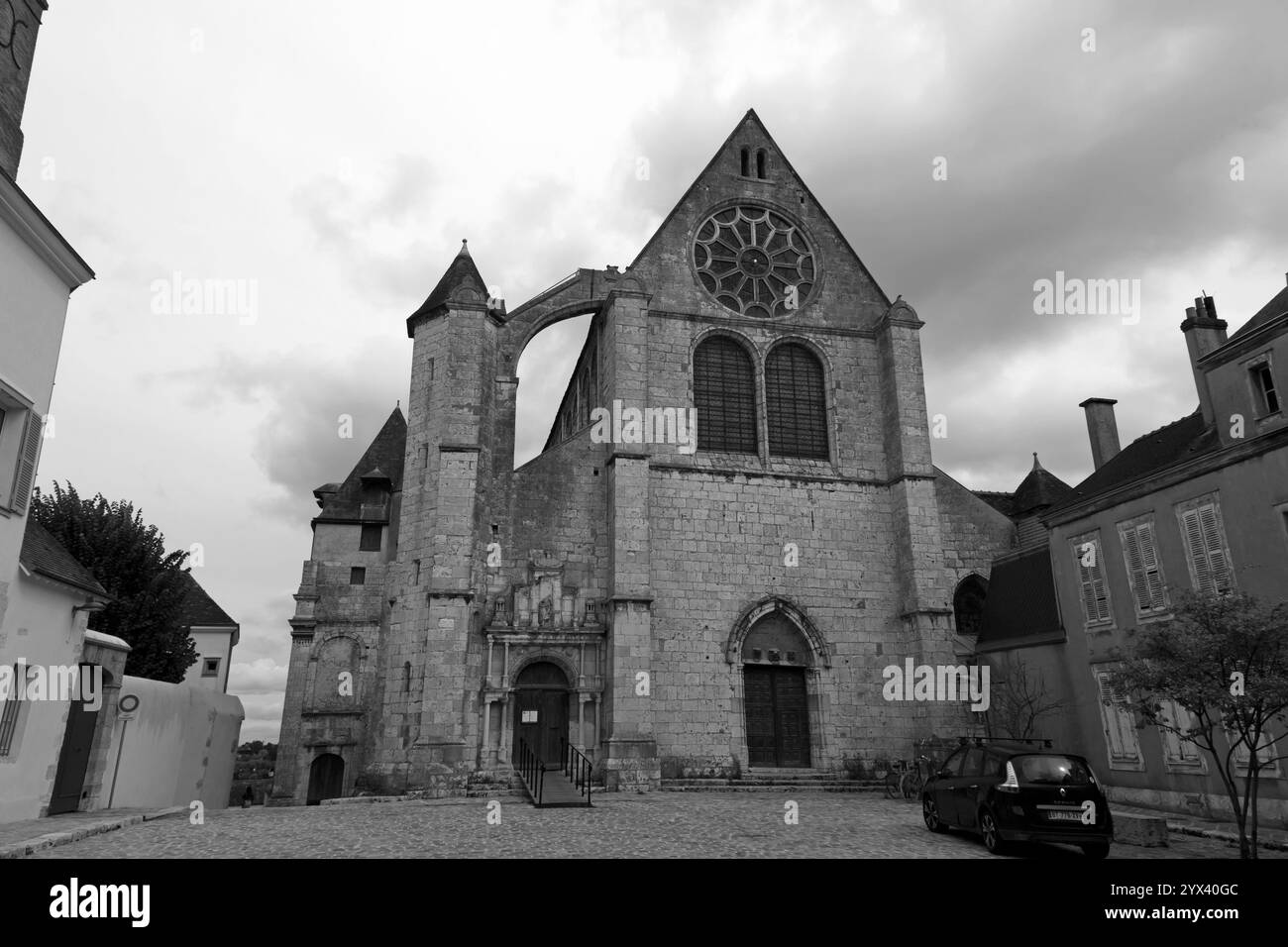
The church of Saint-Aignan owes its name to the bishop of Orléans around 400, a time when a pre-Romanesque church was already built there, later replaced by other buildings that suffered fires in the twelfth century, then in 1262. Saint-Aignan was the parish of the Counts of Blois and Chartres. The church of Saint-Aignan was classified as a historical monument in the list of protected historical monuments in 18401. The crypt, well lit by windows that open onto the rue Saint-Pierre below, dates from the end of the fifteenth century but the current building dates from the beginning of the sixteenth century. The last flamboyant exercises (profiles of the pillars, decorations of tympanums) were followed by the antique columns typical of the Renaissance. The small portal of the north aisle bears the date 1541. The architect may be the same as that of the church of Sainte-Foy, which was partially destroyed during the Revolution. His project for a vault for the nave, whose columns were to support the ribs, has been cancelled. The turret on the left dates from the sixteenth and seventeenthcenturies. It is connected to the main building by a flying buttress carrying a staircase which dates from the 1541 project. The abutments planned for the other flying buttresses remain on the external facades unused. The gallery on the second floor was not built until 1625, under Louis XIII. A wooden shingle was used to cover the nave and a triforium for the aisles. A national asset during the Revolution, the church was generously converted into a military hospital. She escaped the insults of the Terror by becoming a prisoner and then sold for a few assignats to an entrepreneur, who used her as a fodder store, which saved her from being cut up. The Restoration restored it to worship in 1822. In 1869, the interior painting, polychrome frescoes in the Romantic style, was entrusted to a collaborator of Eugène Viollet-le-Duc, Émile Boeswillwald.