4428 x 3180 px | 37,5 x 26,9 cm | 14,8 x 10,6 inches | 300dpi
Data acquisizione:
11 ottobre 2023
Ubicazione:
Liverpool Lime Street station, Lime Street, Liverpool, Merseyside, L1 1JD
Altre informazioni:
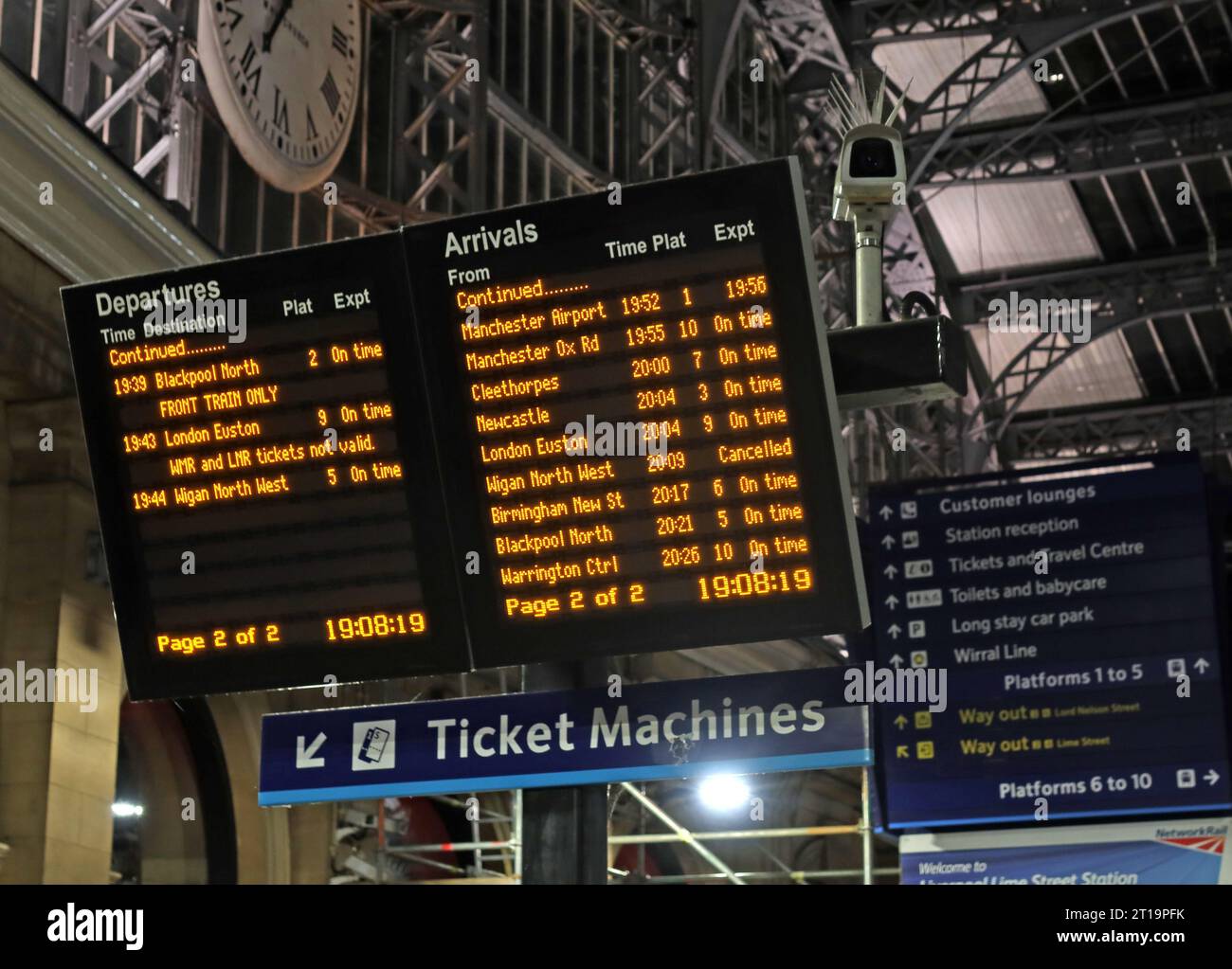
Evening departures and arrivals boards at Liverpool Lime Street station, photographed above the ticket machines sign inside the main concourse. The digital passenger information screens show train times, destinations, platforms, expected times, on-time running and one cancelled service, with visible routes including Blackpool North, London Euston, Manchester Airport, Manchester Oxford Road, Cleethorpes, Newcastle, Wigan North Western, Birmingham New Street and Warrington Central. The image is useful for editorial coverage of rail travel, passenger information, train delays, cancellations, ticket buying, transport signage, railway infrastructure, commuter journeys, intercity services and public transport in Liverpool city centre. Liverpool Lime Street is the main station serving the city centre and is managed by Network Rail. National Rail and Network Rail list the station address as Lime Street, Liverpool, Merseyside, L1 1JD, and Network Rail notes that it has compliant step-free access to all platforms. The visible ironwork, glazed roof, clock, CCTV camera, platform signs and customer service direction boards also connect the photograph to the station’s historic railway architecture and modern passenger management systems. Network Rail’s filming location information describes the Lime Street train shed as an impressive structure and says the 1867 train shed was the largest in the world when built, with a span of 200 feet. This makes the image relevant not just to current rail operations but also to railway heritage, Victorian engineering, station modernisation and the role of Lime Street as a gateway to Merseyside. The evening time shown on the boards, 19:08, gives the scene a commuter and late-travel atmosphere, while the mix of on-time and cancelled services makes it suitable for features on rail reliability, ticket machines, real-time travel data, station wayfinding and the everyday practicalities of catching trains across the North West, Midlands, Yorkshire and