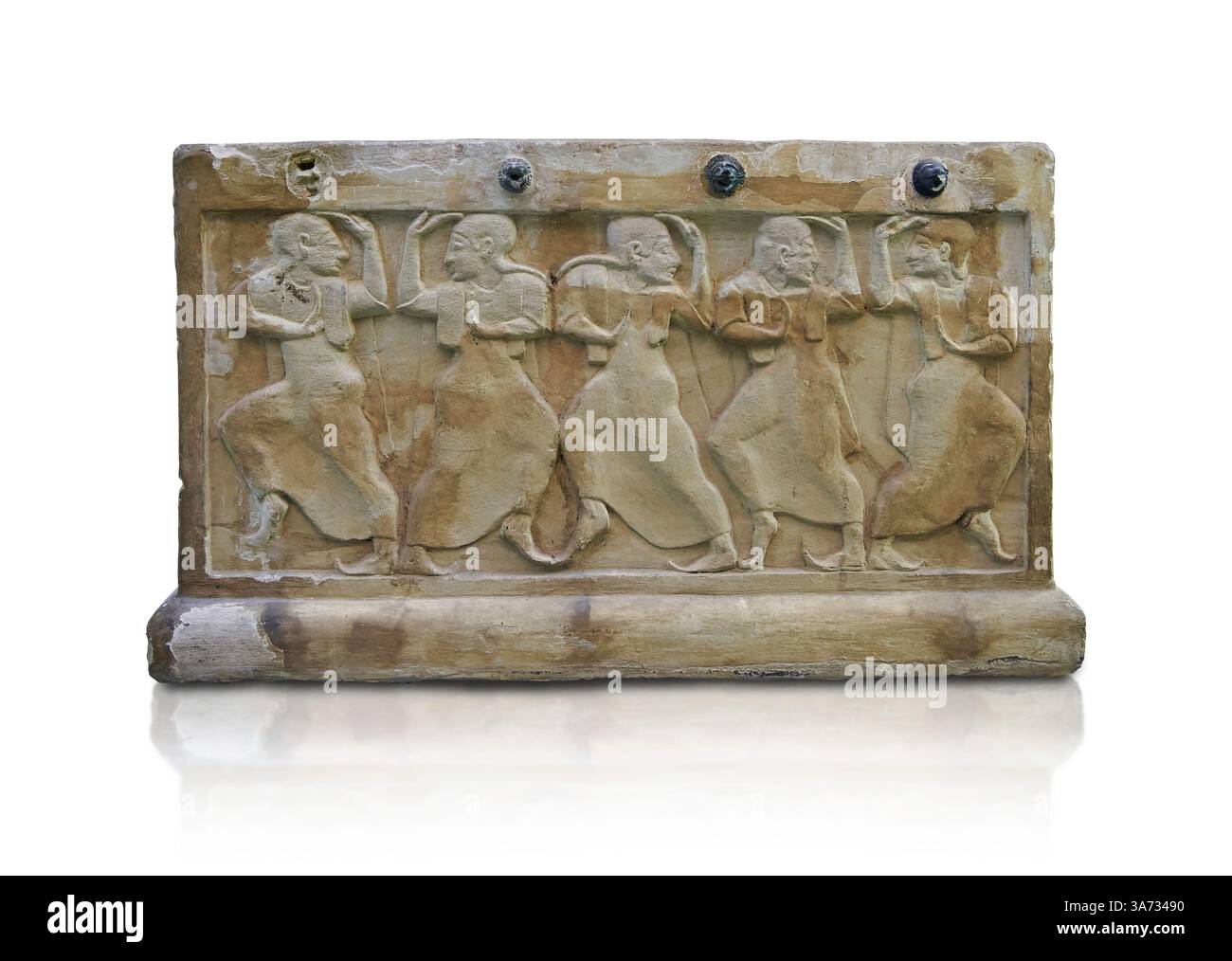
Piccola urna cineraria funeraria etrusca (cineraria) pannello laterale con sculture a rilievo raffiguranti una danza etrusca, di chiusi con III secolo a.C. Nati
5000 x 3555 px | 42,3 x 30,1 cm | 16,7 x 11,9 inches | 300dpi
Data acquisizione:
3 marzo 2025
Ubicazione:
National Archaeological Museum of Florence
Altre informazioni:
Etruscan small funerary cinerary urn (cineraria) side panel with relief sculptures depicting an Etruscan dance, from Chiusi with III century BC. National Archaeological Museum of Florence. Typically the Etruscans had 2 types of burial practices, cremation and inhumation. The funerary cinerary urns were used for to hold Etruscan cremation ashes. The urns were typically cut out of stone or were made of terracotta and its relief decorations were painted. A depiction or the deceased was shown as a reclining figure on the lid of the urn, Kline style. This represented the deceased relaxing on an Etruscan Kline sofa which was the traditional way of lying whilst eating or relaxing in the classical world. On massed produced urns, such as the terracotta urns from norther Etruria, the reclining figures were generic representations of a male or female. On the side of the urns were reliefs depicting scenes from Greek mythology or battle scenes. The urns were placed in Etruscan family tombs with burial good and offerings. Because the Etruscan tombs were cut into rock and were underground, many were covered over and lost, only to be rediscovered in tact by recently archaeologists.