3250 x 4643 px | 27,5 x 39,3 cm | 10,8 x 15,5 inches | 300dpi
Data acquisizione:
21 agosto 2022
Ubicazione:
Penzance, Cornwall, England, UK
Altre informazioni:
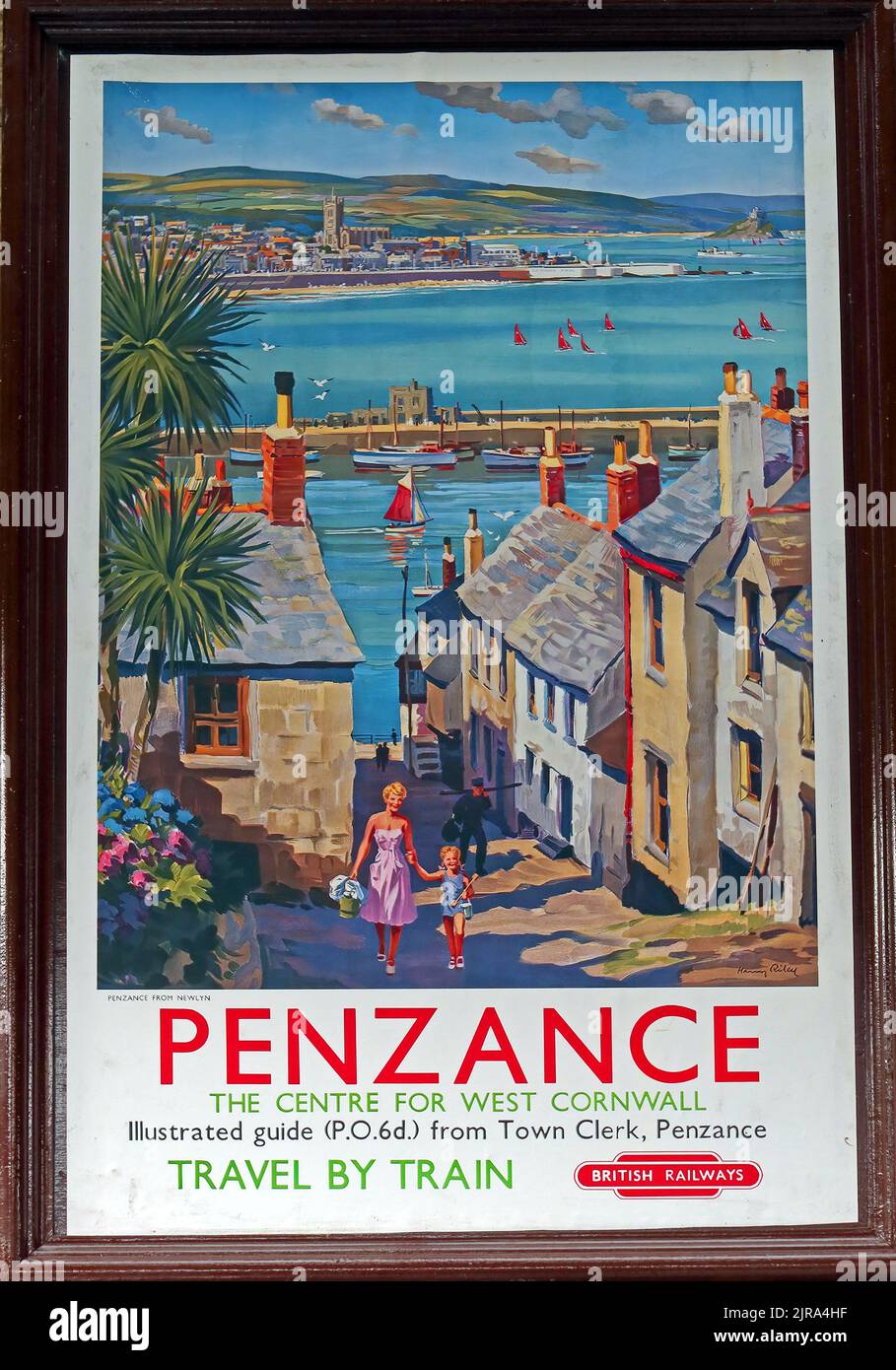
. Recorded at Penzance, Cornwall, England, UK in 2022, the image fixes a recognisable subject and its environment at one point in time, giving later viewers a reliable basis for comparison. The scene records British Railways poster - Penzance, the centre for west Cornwall, South West England, UK. The wider scene also brings together roadside transit, everyday life, local bus network, bus route infrastructure, documentary photography, rail infrastructure, historic rolling stock, place identity, transport accessibility, street-side transport, station environment, rail operations, before-and-after reference, and rail corridor. Today's relevance is strengthened by network modernisation, railway preservation and the continuing question of the importance of preserving signal boxes and rolling stock as industrial heritage. From a 2025-onward perspective, service frequency and bus funding are closely linked to this subject, alongside the importance of bus stops as the physical interface with public transport. The image fixes public access and movement within Penzance, Cornwall, England, UK at one identifiable point, providing a benchmark against redevelopment. The location also brings in contemporary social history, changing land use, rail transport history, freight wagon, bus infrastructure, signal-box architecture, mechanical signalling, and working railway heritage. References to British, centre, Cornwall, Penzance, and Railways give the picture a strong period identity and tie it closely to its named subject. For Penzance, Cornwall, England, UK, the photograph contributes to a cumulative visual history in which changes in use, signs, access and appearance can be traced over time. Its period value extends to network modernisation and how Crewe's identity remains tied to railway engineering and operations within the specific setting of Penzance, Cornwall, England, UK. The period view preserves evidence of earlier appearance before later change alters the scene.