6564 x 4923 px | 55,6 x 41,7 cm | 21,9 x 16,4 inches | 300dpi
Data acquisizione:
16 settembre 2026
Ubicazione:
Royal Oak Branch, 44 Knutsford Road, Warrington, Cheshire, WA4 1AG
Altre informazioni:
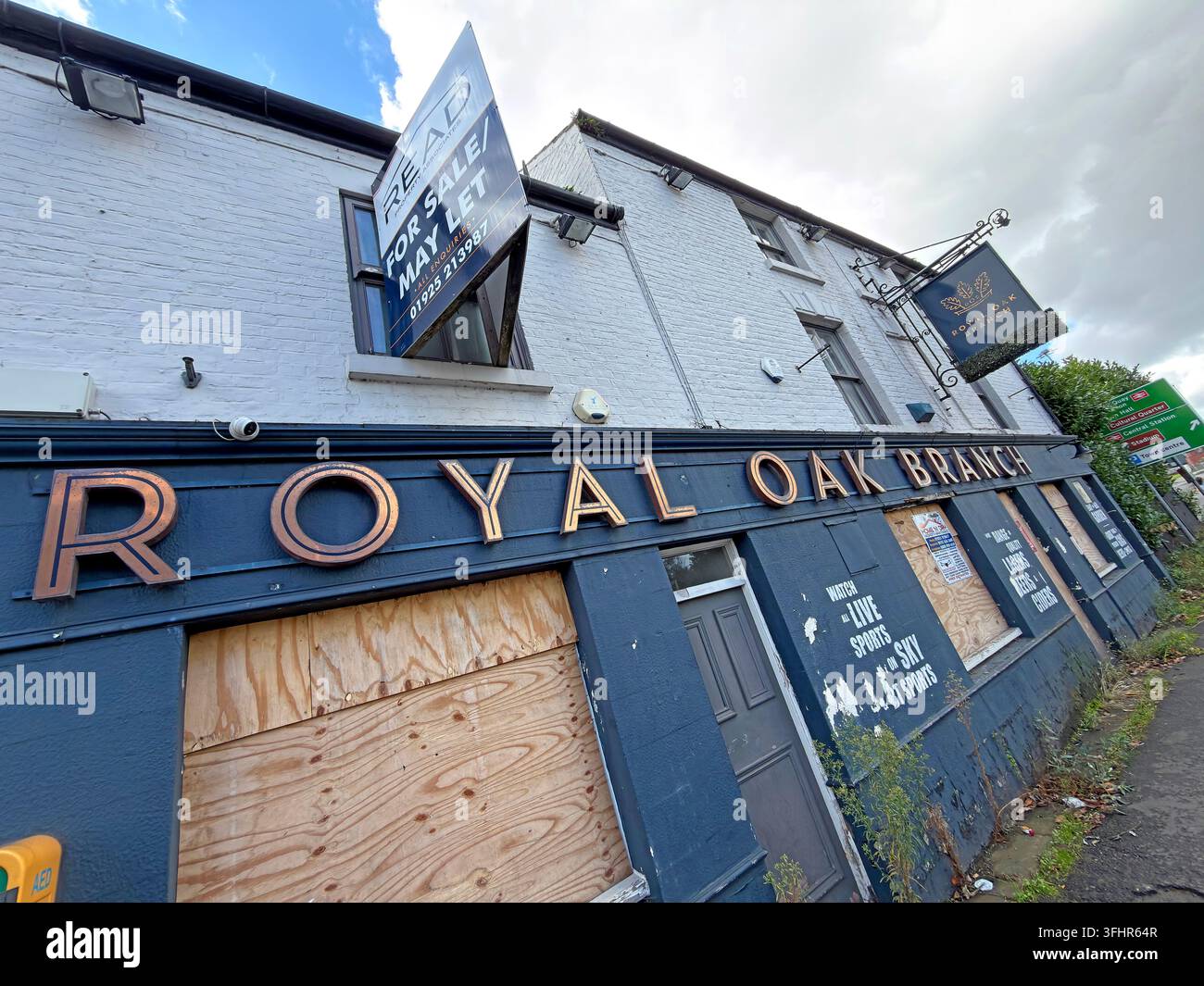
. Boarded-up Royal Oak Branch at 44 Knutsford Road in Warrington, Cheshire, photographed after the long-established community pub closed in August 2025. The dark blue frontage, pub name and projecting signs remain visible, but plywood over the windows and doors gives an immediate visual indication that normal trading has ended. The closure was announced in July 2025, with the final day stated as 10 August, prompting local expressions of disappointment about the loss of a neighbourhood drinking place. CAMRA subsequently recorded the Royal Oak Branch as closed long term, with the future of the premises uncertain and reports that the site had been sold for housing development. Scenes like this have become familiar across Britain as pubs face a combination of changing drinking habits, high operating costs, property values, staffing pressures and competition from home consumption and other leisure choices. The social significance of a pub can extend well beyond the sale of alcohol: community venues host celebrations, fundraising, meetings, sport, live entertainment and informal contact between neighbours. When such a business closes, the building may survive physically while the social use disappears almost overnight. The Royal Oak Branch occupied a prominent roadside position on Knutsford Road, making its boarded frontage a visible marker of change for people passing through the area. Photographs taken during the interval between closure and redevelopment are particularly valuable because pub signage, fixtures and architectural details can be removed quickly once a new use is confirmed. The image therefore records both a specific Warrington closure and the broader contraction and restructuring of the British pub sector. It can illustrate stories about hospitality, vacant premises, redevelopment pressure, community assets and the changing character of established urban neighbourhoods in the mid-2020s.