Questa illustrazione mostra la venatura a rete (palmato) di una foglia di melone, che è una caratteristica chiave nella morfologia vegetale. Descrive la disposizione delle vene in una tipica struttura a foglia, aiutando gli studenti a comprendere i modelli di base della botanica e della venazione delle foglie. Questi tipi di diagrammi vengono utilizzati a scopo didattico per introdurre gli studenti all'anatomia delle piante e alla struttura delle lamelle.
1280 x 1951 px | 21,7 x 33 cm | 8,5 x 13 inches | 150dpi
Altre informazioni:
Questa foto è un'immagine di pubblico dominio, il che significa che il copyright è scaduto o che il titolare del copyright ha rinunciato a tale diritto. Alamy addebita un costo per l'accesso alla copia ad alta risoluzione dell'immagine.
Questa immagine potrebbe avere delle imperfezioni perché è storica o di reportage.
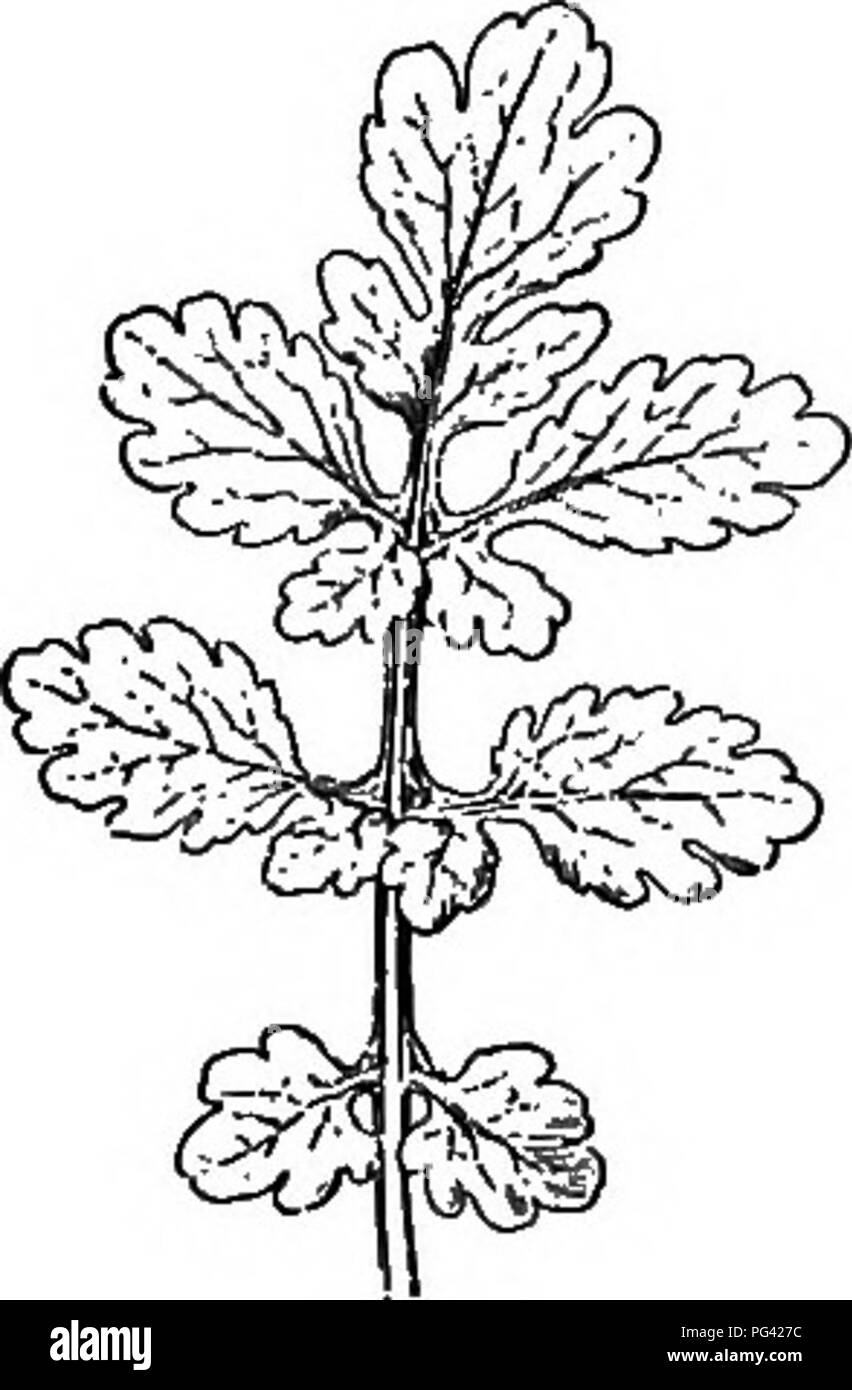
. Essentials of botany. Botany; Botany. Fig. 60. Netted Veining (pal- mate) in Leaf of Melon. identifying them. The student is not expected to learn the names of the several shapes of leaves as a w^hole or of their bases, tips, or margins, except in those cases in which he needs to use and apply them. Many of the words used to describe the shapes of leaves are equally applicable to the leaf- like parts of flowers. 116. The Maple Leaf. — Sketch the leafy twig. Are the leaves arranged in rows like those of the elm ? How are they arranged ? How are the petioles distorted from their natural positions to bring the proper surface of the leaf upward toward the light? Do the edges of these leaves show larger spaces between them than the elm leaves did, i.e., would a spray of maple intercept the sunlight more or less perfectly than a spray of elm V Pull off a single leaf and sketch its lower surface, about natural size. Of the two main parts whose names have already been learned (blade and petiole), which is more developed in the maple than in the elm leaf? Describe: (a) The shape of the maple leaf as a whole. To settle this, place the leaf on paper, mark the positions of the extreme points, and connect these by a smooth line. (h) Its outline as to main divisions; of what kind and how many ? (c) The detailed outline of the mar- gin. (See Appendix I.). Fig. 61. Pinnately Divided Leaf of Celandine. The blade of the leaf is discon- tinuous, consisting of several portions, between which are •spaces in which one part of the blade has been developed.. Please note that these images are extracted from scanned page images that may have been digitally enhanced for readability - coloration and appearance of these illustrations may not perfectly resemble the original work.. Bergen, Joseph Y. (Joseph Young), 1851-1917. Boston, Ginn