5100 x 3456 px | 43,2 x 29,3 cm | 17 x 11,5 inches | 300dpi
Data acquisizione:
14 settembre 2022
Ubicazione:
National Waterways Museum, South Pier Road, Ellesmere Port, Cheshire, England, UK, CH65 4FW
Altre informazioni:
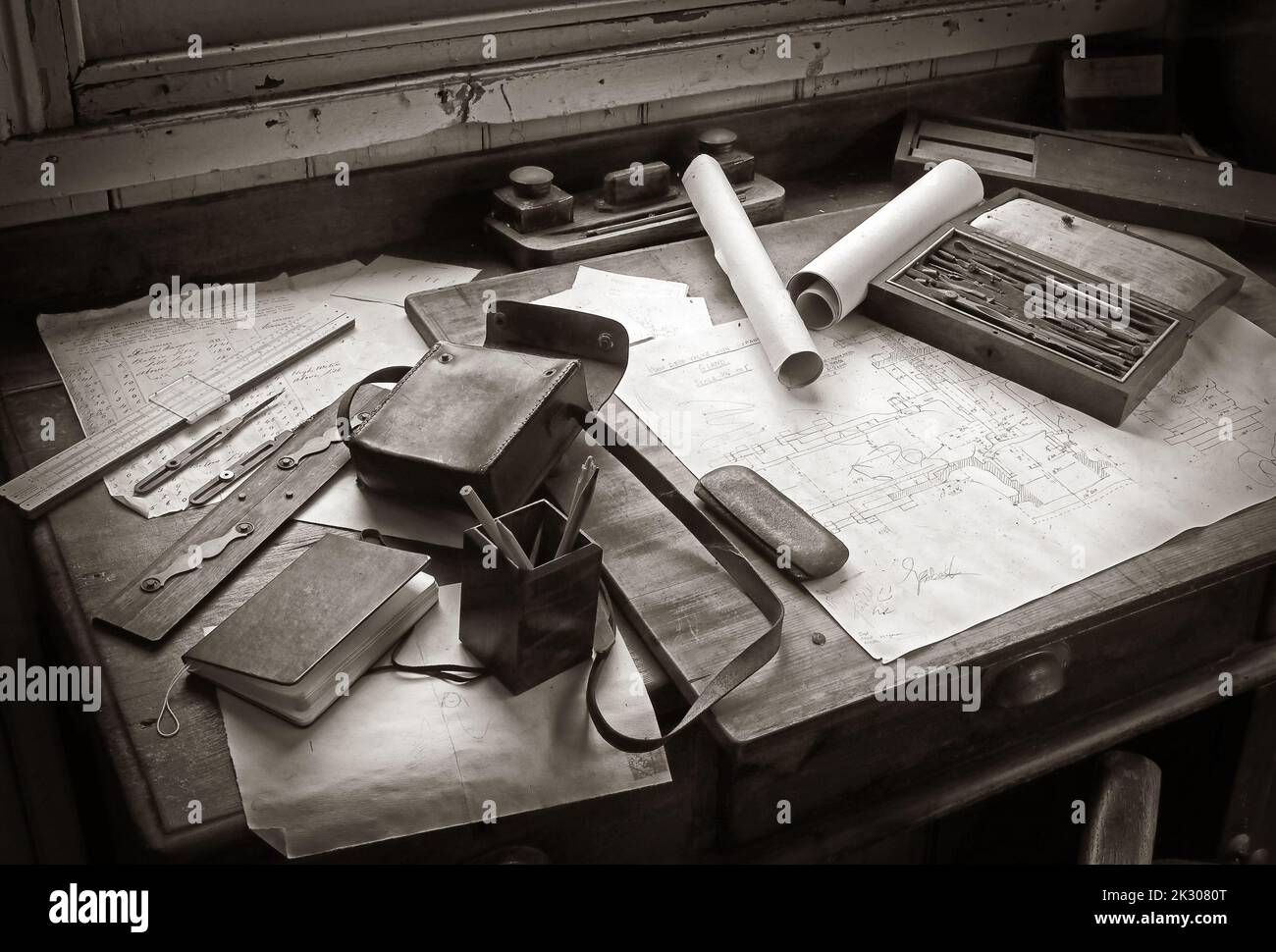
. Made at National Waterways Museum, South Pier Road, Ellesmere Port, Cheshire, England, UK, CH65 4FW in 2022, this photograph records a real place and moment, preserving details that may later be altered by redevelopment, rebranding, changing ownership or different public use. The frame specifically shows Monochrome old fashioned draughtsman's desk, blueprint, engineering drawing, pencils, instruments, rule, office desk ink & tools. The locality and subject together evoke boat museum collection, towpath landscape, waterborne freight, canal transport, inland navigation, historic narrowboat, town-centre renewal, historic townscape, before-and-after reference, architectural character, heritage boating, social history, industrial waterway history, and industrial navigation. The modern context includes continuing discussion of flood resilience, waterway maintenance and the value of canals as both historic infrastructure and blue-green corridors. For current editorial use, adaptive reuse and planning provide additional context, especially through the value of reusing existing buildings rather than wholesale demolition. The archival value lies partly in recording transport arrangements and footfall around National Waterways Museum, South Pier Road, Ellesmere Port, Cheshire, England, UK, CH65 4FW before closure or conversion alters the character of the place. The photograph additionally reflects built heritage, historical comparison, changing land use, public realm, community identity, waterway conservation, urban fabric, and changing streetscape. Elements such as tools, drawing, blueprint, instruments, and Monochrome add documentary specificity and may become increasingly useful when compared with later records. The wider setting at National Waterways Museum, South Pier Road, Ellesmere Port, Cheshire, England, UK, CH65 4FW matters because ordinary visual details often provide the strongest evidence of how a place actually looked and functioned.