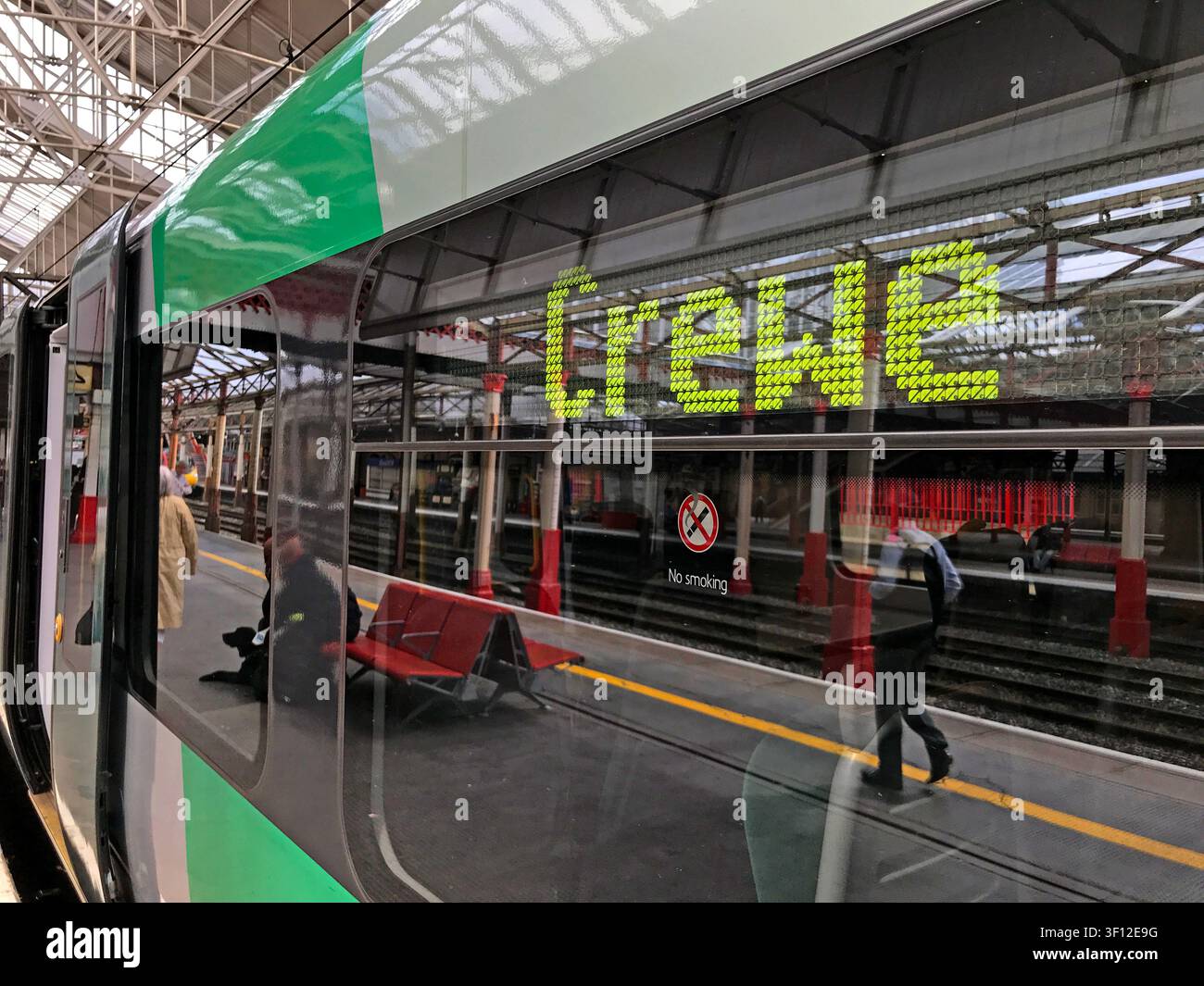
Bright electronic destination display reading “Crewe” is seen through the reflective window of a passenger train standing at Crewe railway station in Cheshire, England. The yellow-green LED lettering dominates the dark glazed panel, while the glass mirrors passengers, red station furniture, platform markings, tracks and parts of the covered station structure. A green section of the train’s exterior livery appears above the window, and an open doorway is visible at the left edge. The layered reflections create an abstract view in which the carriage, platform and opposite side of the station merge into one railway scene. Crewe is one of Britain’s best-known railway junctions, positioned on the West Coast Main Line and serving as an important interchange for long-distance and regional journeys. Passengers change here for services linking London, Birmingham, Manchester, Liverpool, North Wales and Scotland. The station’s platforms, large canopies and complex track layout reflect the town’s historic development around the railway and its continuing role in the national network. The photograph focuses on the everyday visual language of modern rail travel. Electronic destination information reassures passengers that they are boarding the correct service, while window reflections record movement and activity around the train without presenting a conventional platform view. The no-smoking symbol, carriage glazing, yellow safety line and waiting passengers add operational detail and a sense of departure or arrival. The image can illustrate rail transport, passenger information systems, public transport infrastructure, railway interchange, train travel in Cheshire, destination displays, station architecture, regional connectivity, sustainable travel and changing trains at a major British junction. It also provides a contemporary view of Crewe station, where modern rolling stock operates within a location associated with railway heritage.