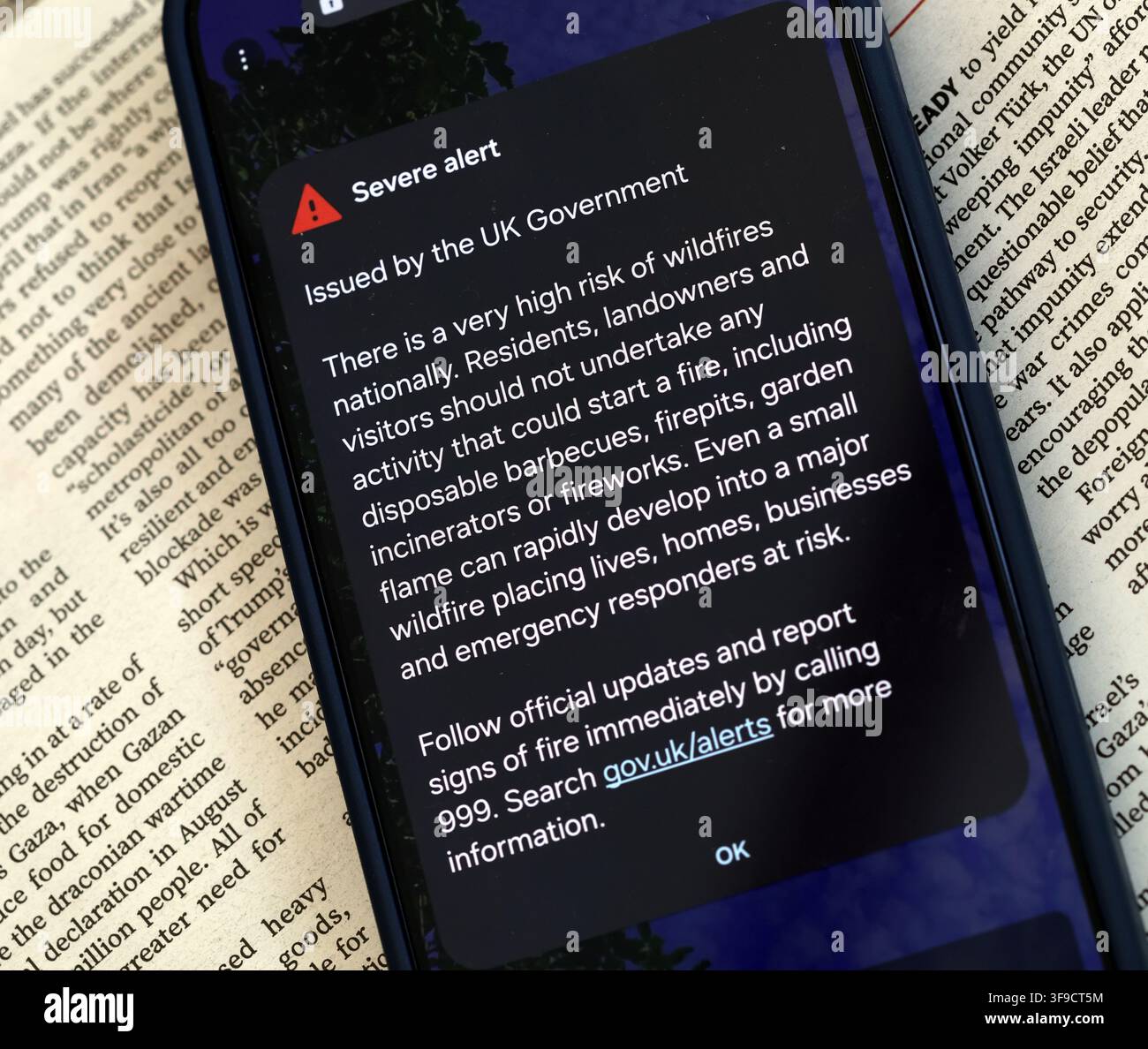
Smartphone che mostra l'allarme di emergenza del Regno Unito del 14 agosto 2026 per gli incendi boschivi, che esorta le persone a evitare barbecue, focolari, inceneritori e fuochi d'artificio.
5464 x 4618 px | 46,3 x 39,1 cm | 18,2 x 15,4 inches | 300dpi
Data acquisizione:
15 agosto 2026
Ubicazione:
United Kingdom
Altre informazioni:
Close-up editorial image of a smartphone displaying the UK Government Severe Alert issued on 14 August 2026 warning of a very high risk of wildfires nationally during an exceptionally hot and dry British summer. The message told residents, landowners and visitors not to undertake activities that could start a fire, specifically naming disposable barbecues, firepits, garden incinerators and fireworks, and warned that even a small flame could rapidly develop into a major wildfire threatening lives, homes, businesses and emergency responders. It also instructed people to report signs of fire immediately by calling 999. The warning was issued as wildfire danger had become a credible national concern. Government guidance earlier in August said the summer had brought some of the UK's hottest days on record and stressed that most UK wildfires are caused by human activity. Dry vegetation, prolonged heat and low rainfall had increased the chance of fires starting and spreading quickly, while fire services were already dealing with incidents. The alert was sent to millions of compatible mobile phones across England and Wales and was described as the most extensive use of the UK's Emergency Alerts system to that date. The image can illustrate wildfire prevention, extreme heat, drought, climate change, emergency communications, civil protection, public safety, risk communication and pressure on fire services. It also raises debate about proportionality and alert fatigue: some questioned whether a nationwide-style warning was an appropriate use of a system designed for life-threatening emergencies, while supporters pointed to real fires, tinder-dry landscapes and repeated heatwaves as justification. The stark warning panel on a smartphone resting on printed pages creates a strong contemporary news image about digital government warnings, public behaviour, summer fire risk and Britain's changing exposure to severe weather and emergency preparedness.