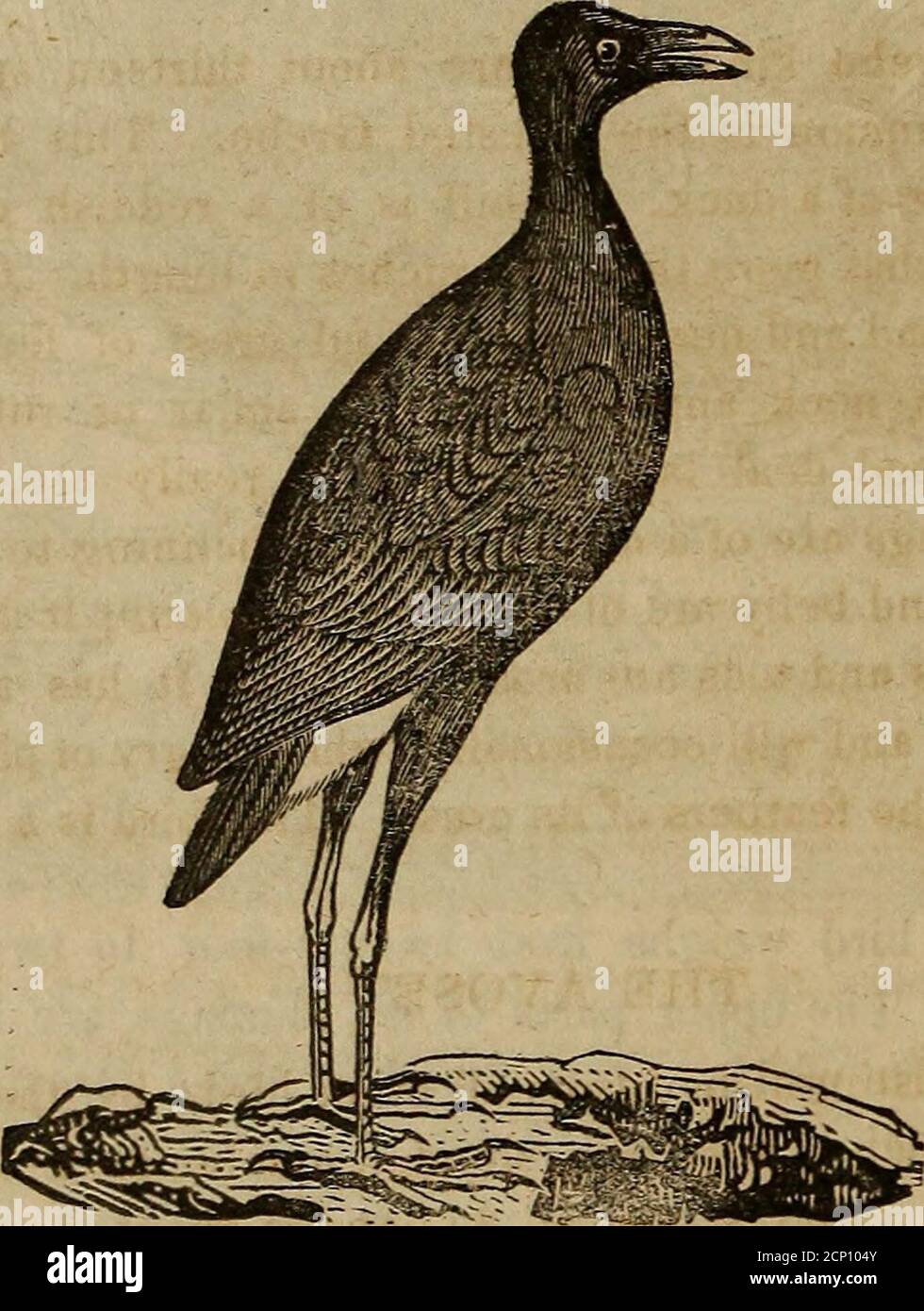
. Un libro di ornitologia, per i giovani. Abbracciando le descrizioni degli uccelli più interessanti e notevoli in tutti i paesi, con particolari avvisi di uccelli americani. IL COOT. Questo uccello pesa da ventiquattro a ventiquattro-eighonce. Le parti superiori del suo piumaggio sono nere, ilparte inferiore bianca. Si trova in grandi torrenti lontano dall'umanità, dove fa un nido di erbacce, e si siede tra le canne, galleggiando sulla superficie, salendo e cadendo con l'acqua. Le canne tra le quali è isbuilt lo mantengono veloce, in modo che raramente è lavato nel mezzo-dle del flusso. Ma quando questo
1373 x 1821 px | 23,2 x 30,8 cm | 9,2 x 12,1 inches | 150dpi
Altre informazioni:
Questa immagine potrebbe avere delle imperfezioni perché è storica o di reportage.
. A Book of ornithology, for youth. Embracing descriptions of the most interesting and remarkable birds in all countries, with particular notices of American birds . hanging down. THE COOT. This bird weighs from twenty-four to twenty-eightounces. The upper parts of its plumage are black, thelower parts white. It is found in large streams remotefrom mankind, where it makes a nest of weeds, and laysit among the reeds, floating on the surface, rising andfalling with the water. The reeds among which it isbuilt keep it fast, so that it is seldom washed into the mid-dle of the stream. But when this happens, the bird sitsin her nest like a mariner in his boat, and steers, with herlegs, her cargo into the nearest harbour. Here she con-tinues to sit in great tranquility, regardless of the impetu-osity of the current, and though the water penetrates her22* 246 PURPLE GALLIMJLE. nest, she hatches her eggs in that wet condition. It is aninert and timid bird and feeds in the evening upon fishes, insects, seeds and herbage. The Coot is not an uncom-mon bird in Britain, where it resides permanently, thoughchanging its residence with the seasons. PURPLE GALLINULE.. This splendid bird is a native of the southern part ofthe continent of America, and has been seen within thelimits of the United States. It is found, though rarely, inthe rice fields and marshes of the State of Georgia, whereit is supposed to breed. THE GREBE. THE AVOSET. 247 THE GREBE. The colour of this bird is white and black. Its legs areshort, and made for swimming, not for walking. It sel-dom leaves the water, frequenting chiefly broad, shallowpools, where it finds sufficient prey. The plumage of thebreast is of a most beautiful silvery white, and as glossyas satin. Of the Grebe kind there are about thirteen species.The most common is the Crested Grebe. This bird isabout the size of a duck. Its bill is of a reddish colour, and is somewhat more than two inches in length. On thetop of the head and neck is a beautiful c