3708 x 4500 px | 31,4 x 38,1 cm | 12,4 x 15 inches | 300dpi
Data acquisizione:
7 aprile 2026
Altre informazioni:
Solo diritti di accesso. Si tratta di un’immagine di tipo handout o di pubblico dominio fornita da una terza parte. Alamy concede l’accesso al file digitale, ma non fornisce alcuna garanzia in merito al copyright o ai diritti morali. Qualsiasi alterazione, modifica o ritaglio è vietato senza previa approvazione. Tutti gli utilizzi commerciali richiedono un’autorizzazione preventiva da parte del fornitore dei contenuti.
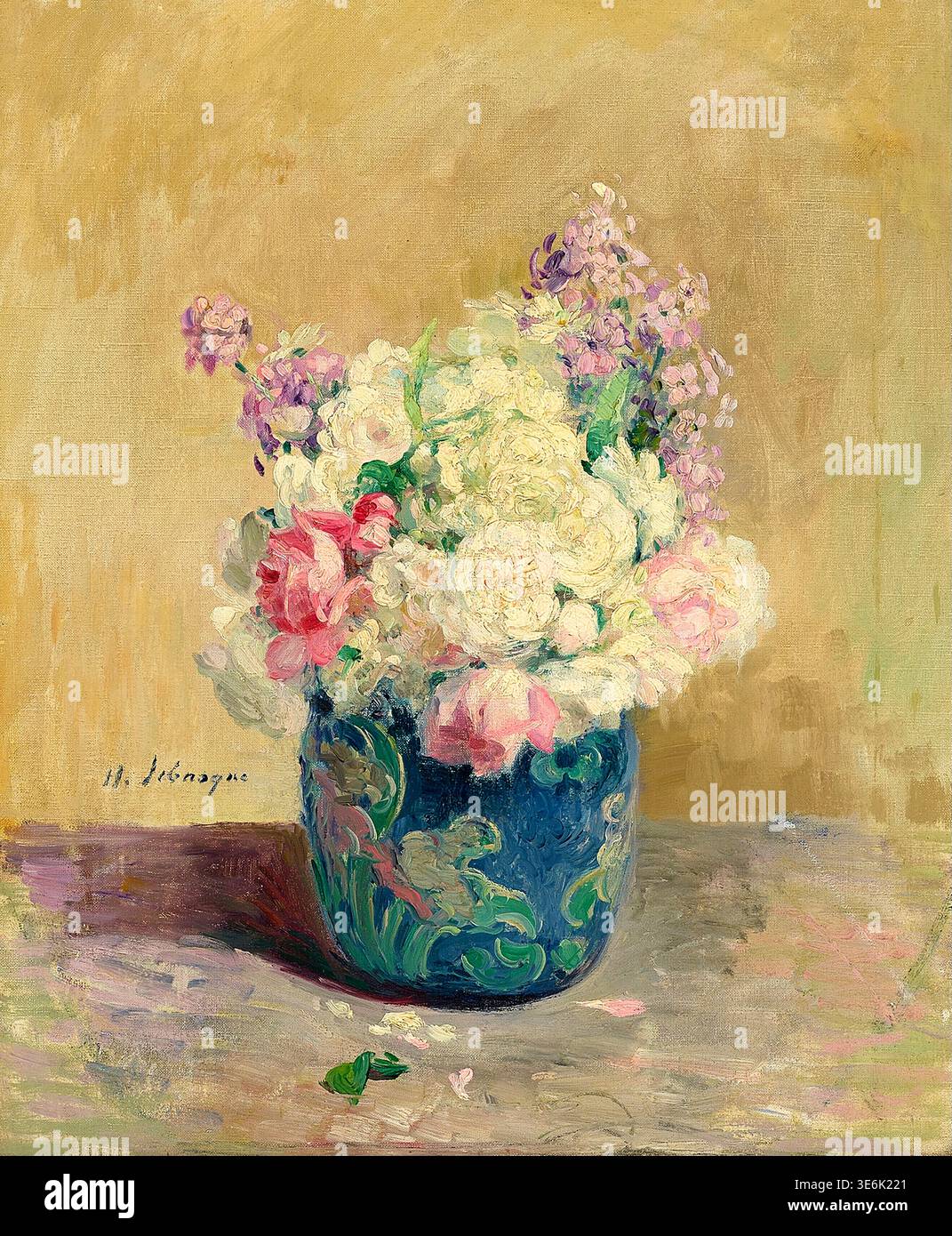
Henri Lebasque was a French post-impressionist painter. He was born at Champigné (Maine-et-Loire). His work is represented in French museums, notably Angers, Geneva (Petit Palais), Lille (Musée des Beaux-Arts), Nantes, and Paris (Musée d’Orsay). He started his education at the École régionale des beaux-arts d'Angers, and moved to Paris in 1886. There, Lebasque started studying under Léon Bonnat, and assisted Ferdinand Humbert with the decorative murals at the Panthéon. Around this time, Lebasque met Camille Pissarro and Auguste Renoir, who later would have a large impact on his work. Lebasque's vision was coloured by his contact with younger painters, especially Édouard Vuillard and Pierre Bonnard, founders of Les Nabis, a group of Intimist painters that first favoured the calm and quietude of domestic subject matter. From his first acquaintance with Georges Seurat and Paul Signac, Lebasque learnt the significance of a colour theory which stressed the use of complementary colours in shading.