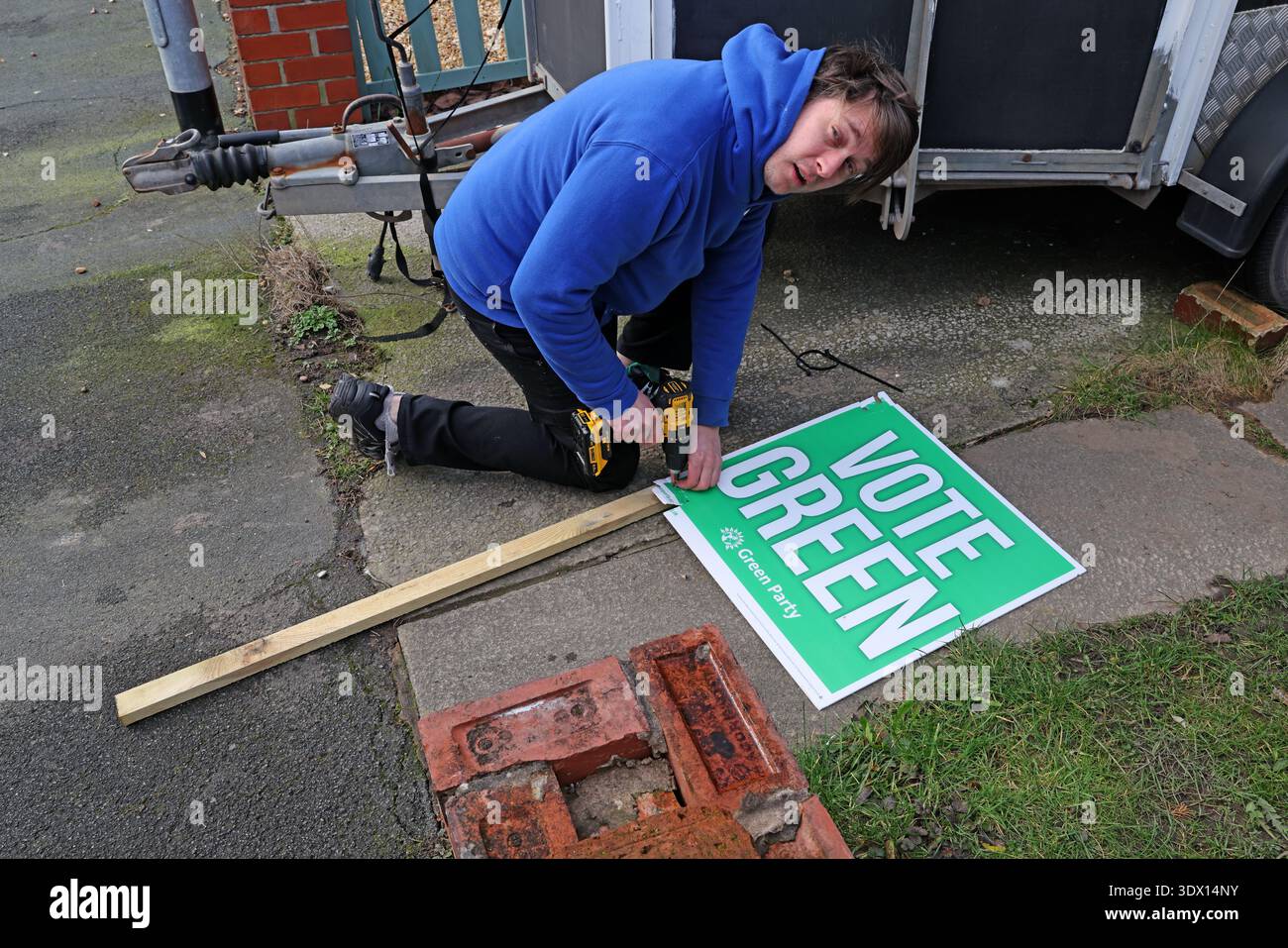
Volontario del Green Party che installa un tabellone "Vote Green" al di fuori della casa di un sostenitore a Denton, Greater Manchester, Inghilterra, Regno Unito.
8192 x 5464 px | 69,4 x 46,3 cm | 27,3 x 18,2 inches | 300dpi
Data acquisizione:
24 febbraio 2026
Ubicazione:
Green Party volunteer installing a “Vote Green” garden stake board outside a supporter’s home in Den
Altre informazioni:
A campaign volunteer kneels on a pavement edge in a front garden, fixing a bright green “VOTE GREEN” stake board for the Green Party. The scene is candid and practical: a cordless drill in hand, a wooden stake ready to be driven in, and a corrugated plastic (correx) sign laid out on the ground beside bricks and garden edging. It captures the unglamorous mechanics of UK electioneering, where visibility is built one doorstep at a time through posters, boards, leaflets and volunteers willing to work whatever the weather. This photograph suits editorial stories about parliamentary by elections, local elections, party organisation, grassroots activism, political marketing and get out the vote operations. It shows how support is signalled publicly by households, how parties read momentum through the spread of garden boards, and how campaigning blends civic engagement with ordinary domestic spaces such as driveways, paths and small front lawns. The lack of crowds keeps the focus on the labour behind political messaging, useful for commentary on turnout, persuasion, volunteer networks, and the realities of ground campaigns. Garden stake boards also bring practicalities: getting permission from homeowners, choosing positions that are visible but not obstructive, and coping with wind, rain and uneven ground. The crisp typography, bold colour and readable slogan demonstrate political branding designed for quick recognition from passing pedestrians and motorists. Set in the Greater Manchester context of Denton and the wider Gorton and Denton constituency, the image can accompany reporting on voter realignment, local issues such as housing, cost of living and public services, and the way smaller parties try to convert visibility into votes. It also fits broader themes of democracy, community participation and the role of campaign materials in shaping street level political conversation.